Missing One of the Best Sports in the World?
American football looks baffling from this side of the Atlantic. Learn four attempts, ten yards, and enough of the basics to discover why the NFL becomes so compelling once you can see the game underneath the noise.
Opening
American football is brilliant.
It is also spectacularly bad at explaining itself to newcomers.
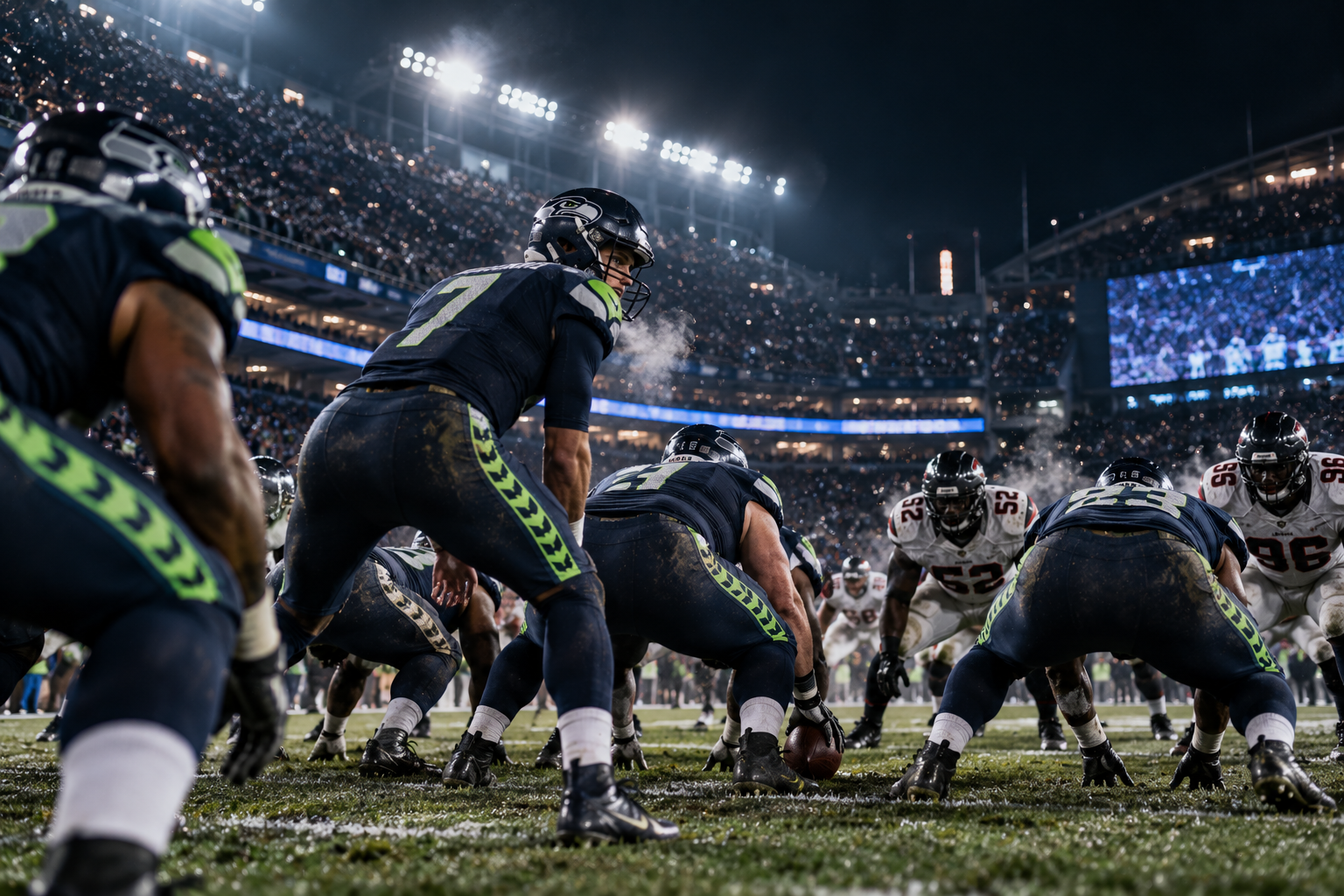
Turn on an NFL game for the first time and you'll see enormous men in helmets lining up against each other. Someone shouts something incomprehensible. The ball moves for six seconds. Everyone stops. A yellow flag appears. An American commentator says it's "third and seven from the 42" as though this should mean something to you.
Then there are some adverts.
For most Europeans, this is roughly where the experiment ends.
Which is a shame, because once somebody explains the basic idea, the whole thing starts to come into focus.
And the basic idea really is basic.
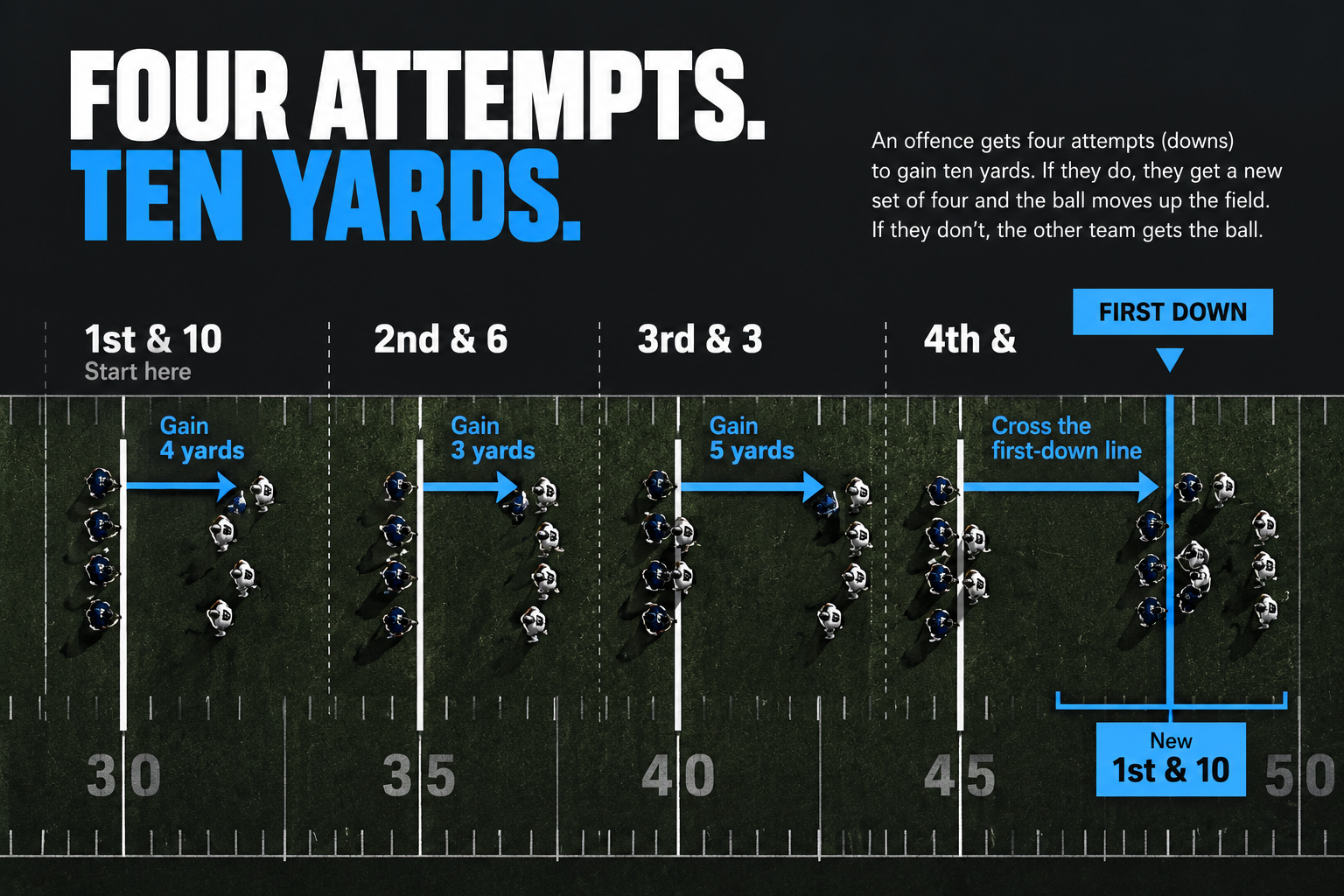
You have four attempts to move the ball ten yards.
Manage it and you get another four attempts to move it another ten.
Keep doing that and eventually you reach the other team's end of the field.
That's American football.
Everything else is what makes it brilliant.
Start here: four goes, ten yards
Forget quarterbacks, blitzes, sacks, nickel defences and whatever else the commentators are talking about.
Imagine the field in front of you.
Your team has the ball.
Ten yards ahead is an invisible line you need to reach. You have four attempts, called downs, to get there.
Say your first play gains four yards.
Now you've used one of your four attempts and have six yards left.
The television will show: 2nd & 6.
That's all it means. Second attempt. Six yards to go.
Gain another three yards and it becomes 3rd & 3. Third attempt. Three yards to go.
Get those three yards and the counter resets. You have a first down, which means a new series of downs to travel the next ten yards.
Once you understand that, a huge amount of what you're watching suddenly makes sense.
So why does everyone keep stopping?
This is probably the biggest adjustment if you're used to football or rugby.
American football isn't supposed to flow continuously.
Think of it as a succession of small battles.
Before each one, the attacking team chooses a play. Maybe they'll run the ball. Maybe they'll throw it. Maybe they'll make it look as though they're doing one and then do the other.
The defence is doing the same thing in reverse.
Then the ball is snapped.
For a few seconds, 22 people execute two competing plans at enormous speed.
Someone gets tackled. The ball goes out. A pass falls incomplete. The play ends.
Reset.
Now both sides have another decision to make.
Once you start seeing each play as a little tactical contest, the pauses stop feeling quite so strange. You start using them yourself.
What are they going to try now?
That's when the sport begins to get you.
Meet the two lines
There are two lines worth knowing.
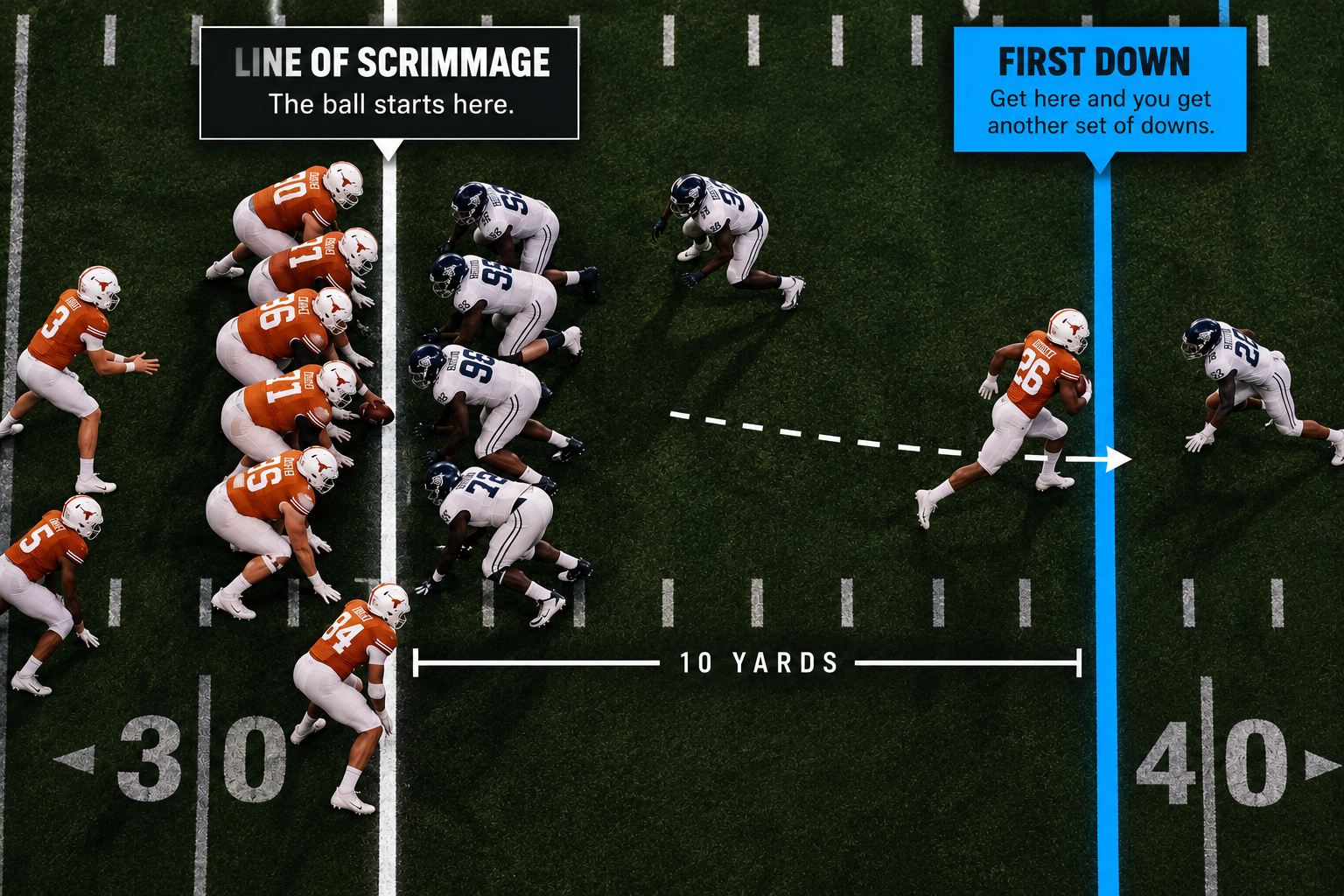
The line of scrimmage is where the ball starts.
The first-down line is where the offence needs to get to.
On television, broadcasters usually make the first-down target wonderfully obvious by digitally adding a coloured line across the field.
Watch those two lines rather than trying to watch all 22 players.
Where are we starting?
Where do we need to get to?
Everything in between is the fight.
Running and throwing
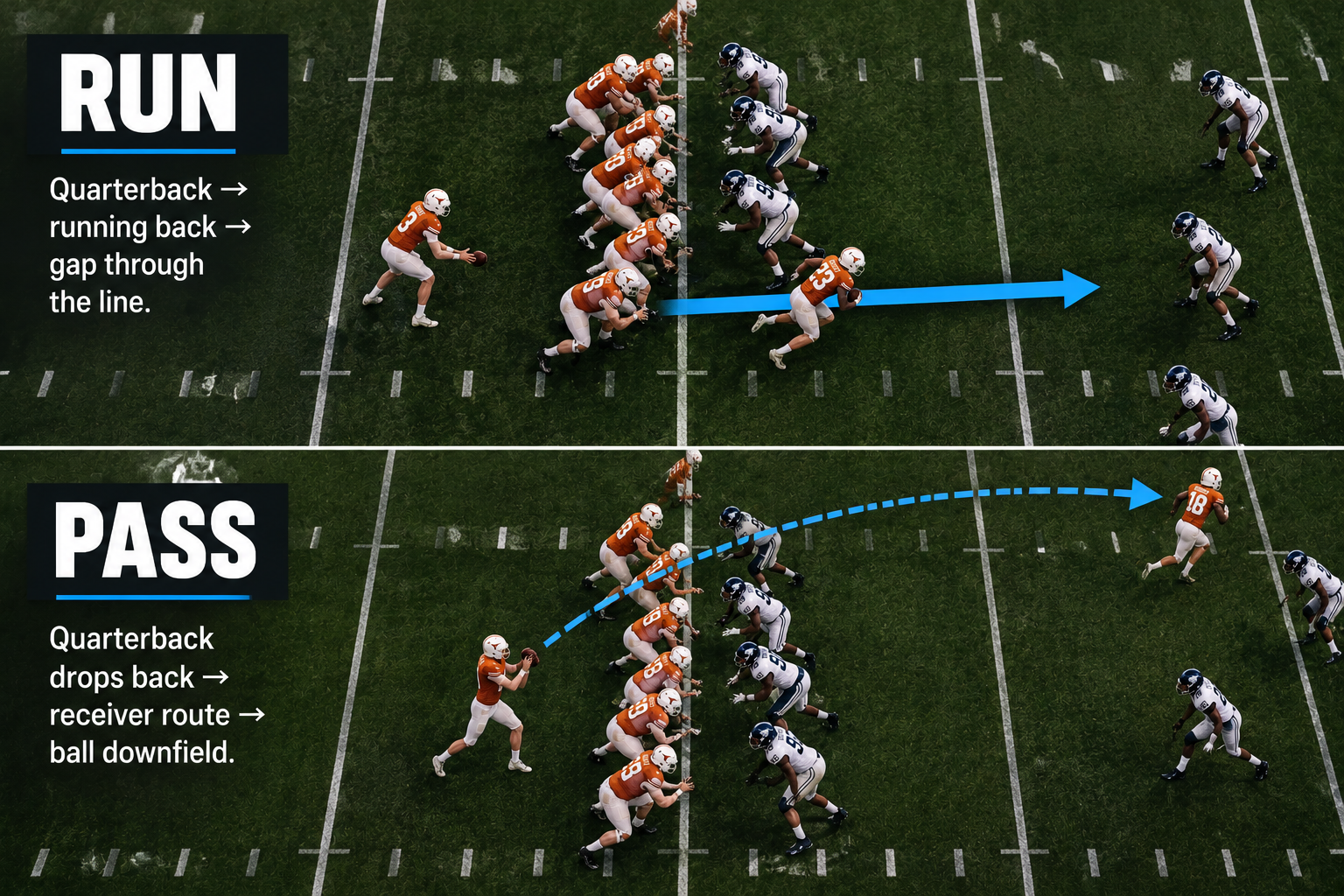
The offence basically has two ways of moving the ball.
They can run it.
The quarterback can hand the ball to a running back, who tries to find a gap and get as far upfield as possible before several very large men stop him.
Or they can throw it.
The quarterback drops back while his receivers run planned routes down the field, trying to create enough space for him to put the ball where a defender can't reach it.
The defence doesn't know which is coming.
And that is where things get interesting.
A team can line up looking as though it's going to run and throw instead. The quarterback can pretend to hand the ball over, keep it, then throw downfield. Players can move before the snap and force the defence to reveal how it intends to react.
At first, you won't see any of this.
That's fine.
Watch the ball.
Run or pass?
You'll start seeing the rest soon enough.
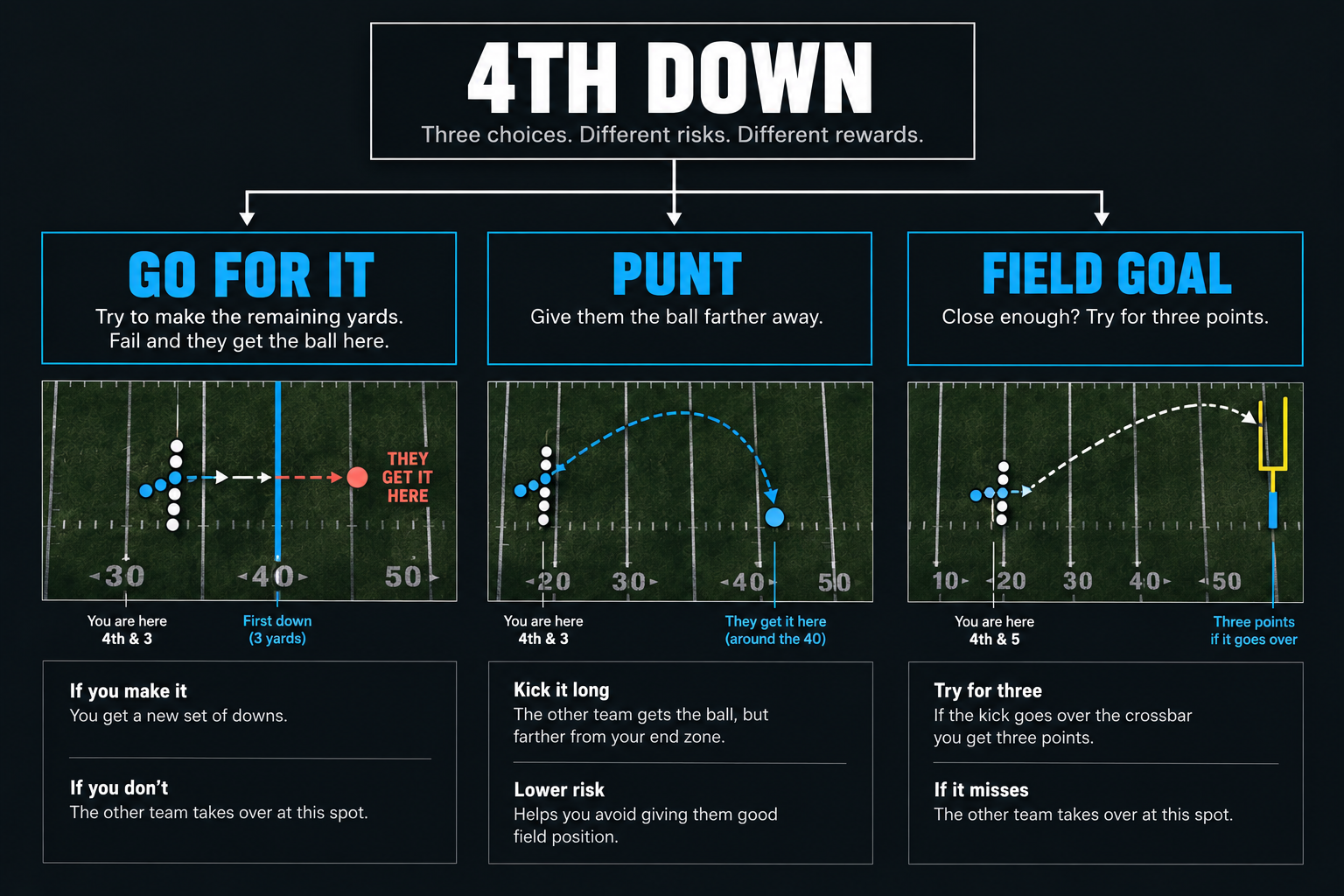
Why do they sometimes kick the ball away?
Eventually you'll see something that appears completely mad.
A team has spent several minutes fighting its way up the field.
Then, on fourth down, it deliberately boots the ball to the opposition.
Why?
Because fourth down is the last attempt in the series.
If you go for it and fail to reach the required distance, the other team takes possession where the play ends.
If you're deep in your own territory, that could be disastrous.
So teams often punt instead, kicking the ball a long way downfield before handing over possession.
They're giving up the ball, but trying to make the opposition start much farther away.
This is also why fourth down gets interesting.
4th & 1?
Maybe you risk it.
4th & 12?
Probably not.
Suddenly field position, score and time all matter.
You're making decisions now.
You're watching American football.
The scoring is easy
A touchdown is worth six points.
Get the ball into the opponent's end zone and you've scored one.
Afterwards you can kick for one extra point, or attempt another play into the end zone for two.
A field goal is worth three points. Kick the ball between the uprights and over the crossbar.
A safety is worth two. In simple terms, it usually happens when the team with the ball is responsible for the ball becoming dead in its own end zone.
That's enough scoring knowledge for your first game.
What about all the bloody flags?
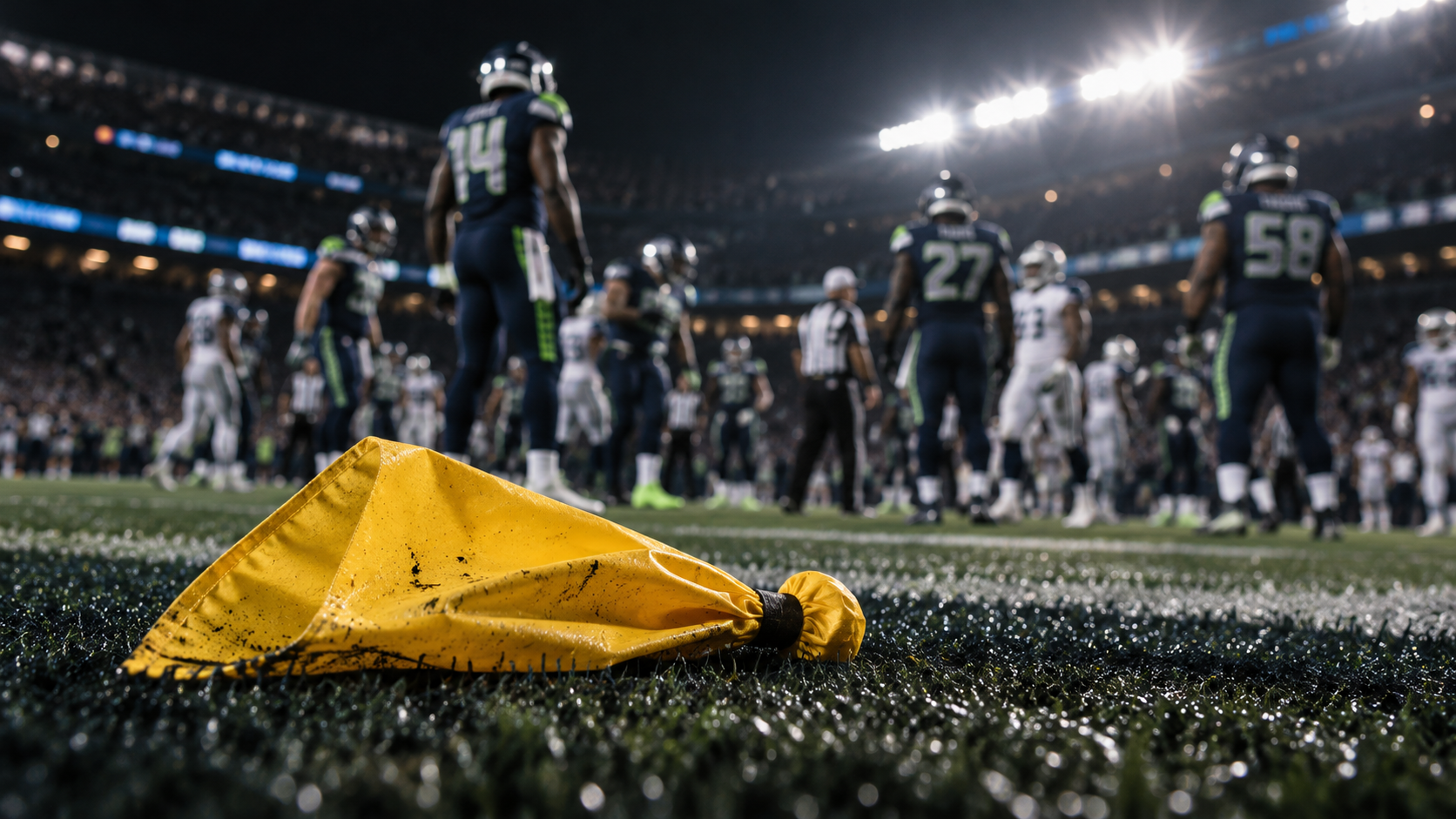
A yellow flag means an official has seen a possible foul.
There are lots of them.
Do not learn them all.
Seriously.
You'll gradually pick up the common ones simply by watching.
A false start is essentially the offence moving illegally before the snap.
Offside usually means a player was illegally across the line when the ball was snapped.
Holding is illegally restricting an opponent.
Pass interference is illegal contact that significantly hinders an eligible player's opportunity to catch a forward pass.
There are qualifications, exceptions and enough detail to occupy people on American television for several hours every Sunday.
You don't need them yet.
Yellow flag.
Something naughty happened.
The referee will explain it.
Carry on.
Why people become obsessed with it
Now we can get to the good bit.
Because once you can follow the basic game, you begin to notice the game underneath it.
American football looks like organised violence.
It is actually extraordinarily tactical organised violence.
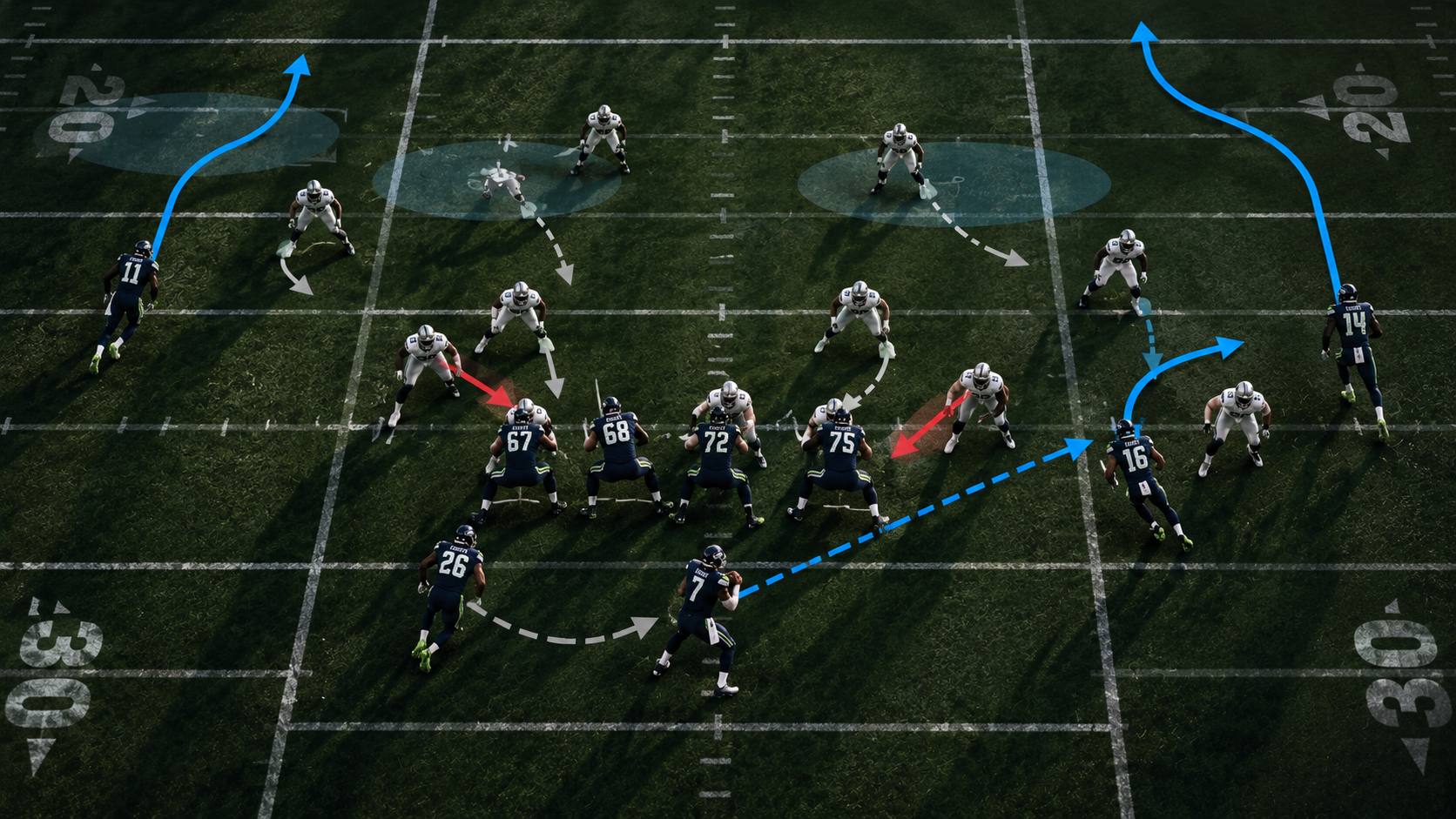
Every offensive play is designed.
One player may sprint downfield not because anyone intends to throw him the ball, but because taking a defender with him creates space for someone else.
A running back may head one way while the quarterback fakes the handoff and throws the other.
The defence may look as though it's about to send six men charging at the quarterback, then suddenly drop some of them back into coverage.
Or do exactly what it appeared to be doing and send the lot.
The quarterback has seconds to work out what is happening while several enormous professional athletes attempt to flatten him.
And all over the field, individual contests are happening simultaneously.
A receiver against a cornerback.
An offensive tackle trying to stop an edge rusher.
A linebacker reading the movement of the offensive line.
The quarterback trying to understand what the safety is doing.
The more you learn, the more the field opens up.
Don't try to watch everything
For your first game, don't.
Watch five things:
- What down is it?
- How many yards do they need?
- Where is the first-down line?
- Did they run it or throw it?
- Did they get enough yards?
That's genuinely enough.
You'll start noticing other things without trying.
You'll recognise when the quarterback is under pressure.
You'll realise why a three-yard run can be useful.
You'll understand why a team going for it on fourth down makes the crowd suddenly get louder.
Then one day you'll find yourself annoyed because a team punted on 4th & 2 when you thought they should have gone for it.
At which point it's probably too late for you.
Give it one game
Don't learn the rulebook.
Don't choose a team because someone on the internet told you which franchise has the nicest history.
Don't watch forty minutes of YouTube explaining defensive coverages.
Just find a game.
Remember:
Four attempts. Ten yards.
Watch the down and distance.
Watch where they need to get to.
See what the offence tries to do.
Because you might have spent years ignoring one of the best sports in the world.
And it would be a shame if the only reason was that nobody ever explained the bloody thing to you.