William Marshal: The Greatest Knight Who Ever Lived
William Marshal rose from landless younger son to tournament champion, Earl of Pembroke and regent of England. His life reads like fantasy, which makes him a perfect doorway from Ser Duncan the Tall into the real world of the Plantagenets.
Opening
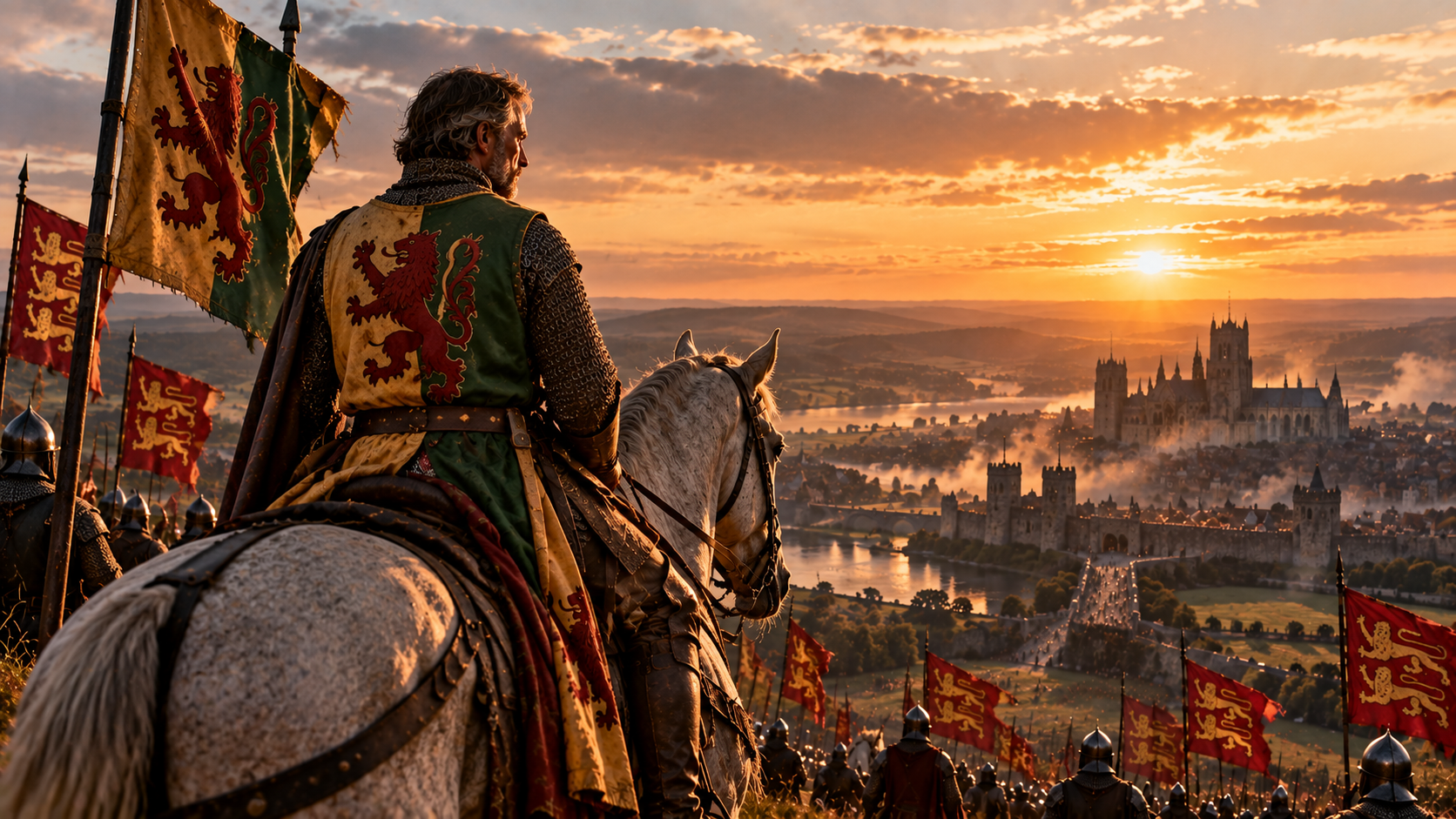
In May 1217, William Marshal was an old man with a kingdom to save.King John was dead. His heir, Henry III, was nine years old. Rebel English barons had invited Prince Louis of France across the Channel, and French forces held London and much of the south-east. At Lincoln, a rebel and French army occupied the city while the castle still held out for the boy king.Marshal was more than 70 years old. He had spent most of his life being hit with swords, lances and maces, had served the most dangerous royal family in Europe, and had already reached an age at which a sensible medieval aristocrat might have considered sitting this one out.Instead, he put on his armour and went to war.On 20 May his royalist army attacked Lincoln. Marshal led from the front. The fighting broke the rebel army, captured many of its leading barons and changed the course of the civil war. A few months later, after a French fleet was defeated off Sandwich, Louis abandoned his claim to the English throne.It would be an excellent ending to a knight's story.For William Marshal, it was simply the last great episode in a life that already sounded made up.
Before Dunk, there was William
If you know Ser Duncan the Tall from George R. R. Martin's Dunk and Egg stories, Marshal may feel strangely familiar.Dunk begins as a wandering hedge knight with little money, a large frame, a battered set of equipment and a determination to make something of himself through the dangerous world of tournaments and noble households. His road eventually carries him into the affairs of princes and kings.Marshal's life has the same irresistible shape, although the similarities should not be pushed into a neat one-to-one comparison. Dunk is fictional, low-born and very much his own character. Marshal was the younger son of a minor baron and already belonged to the knightly world.But the feeling is similar. A man starts without much to inherit. He learns to fight. Tournaments give him a way up. Great lords notice him. Royal families pull him into their feuds. Decades later, the knight who once had to make his own fortune is standing beside a king.Martin describes Dunk as a hedge knight travelling the Seven Kingdoms with his young squire Egg. Marshal gives us something even better for a history piece: a real medieval career in which the tournament field, the royal court and the battlefield were all connected.Westeros has dragons. The Plantagenets barely needed them.
The boy his father was prepared to lose
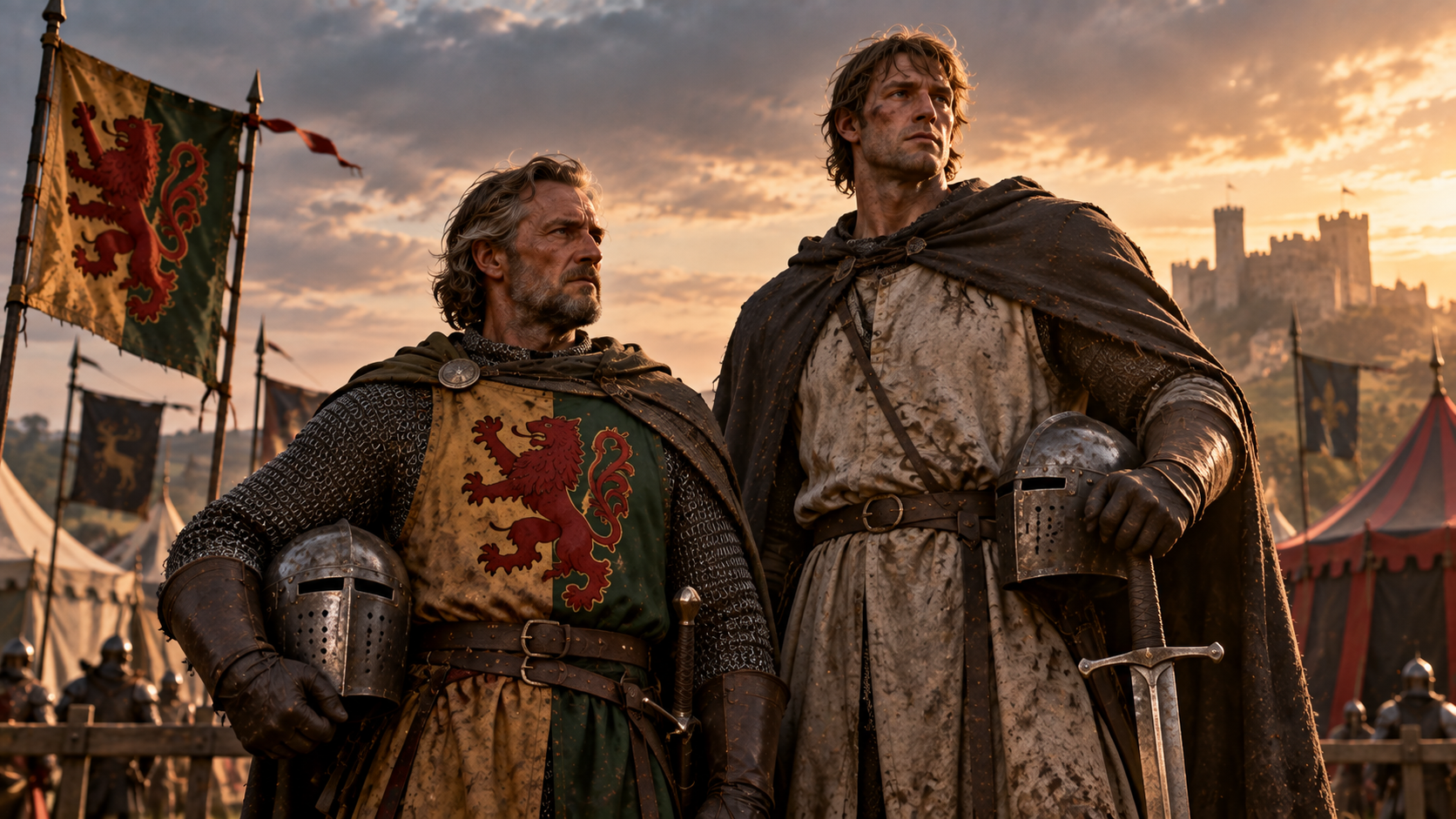
William was born around 1146 into the family of John Marshal, a minor nobleman who held the hereditary office that gave the family its name.His first famous appearance in the story is not heroic. He is a child and a hostage.During the civil war known as the Anarchy, King Stephen besieged John Marshal's castle at Newbury. The young William was handed over as security for a truce. John then used the breathing space to strengthen his position instead of surrendering.According to the later History of William Marshal, when Stephen threatened to kill the boy, John replied that he still had the hammer and anvil to forge better sons.It is one of those medieval lines that survives because it is so cold.Stephen did not kill William. The boy survived, and as a younger son he could not expect the family lands to fall into his lap anyway. His future would have to be built elsewhere.Around the age of 12 he was sent to Normandy to the household of William de Tancarville, his mother's cousin, where he trained for the profession that would define him.He learned to be a knight.
A professional fighter
The medieval tournament was not the neat joust of later films, with two polished knights taking turns down a fenced lane while everyone watches from a grandstand.In Marshal's youth, tournaments could involve large groups of mounted knights fighting across open country. Men were knocked from horses, chased, captured and ransomed. Horses and armour were valuable. So were the men wearing them.That made the tournament circuit dangerous, but it also made it a business.Marshal was very good at it.After being knighted in the 1160s, he began building a reputation in the mêlée. English Heritage records that at one point he and a companion captured more than 100 knights in only two months. His later biography claims hundreds of captures across his career.The exact totals come from a work written to celebrate him, so they deserve some caution. The larger point does not. Marshal became one of the outstanding tournament fighters of his age and made serious money from it.This matters because it strips away some of the romance we have added to medieval knighthood. Marshal was brave, but bravery alone did not buy horses, armour, servants or status. Fighting was his profession. Capturing the right opponent could be extremely profitable.He was effectively turning violence, skill and reputation into capital.And it worked.
The Plantagenets notice him
Marshal's ability brought him into the orbit of the most powerful family in western Europe.Eleanor of Aquitaine helped ransom him after he was captured in fighting in 1168, and he later entered the household of her son Henry the Young King. Henry had been crowned during his father's lifetime but was given little real power, an arrangement almost designed to create family trouble.It did.Henry II's sons repeatedly fought their father and each other over land, authority and inheritance. Eleanor backed her sons in the great revolt of 1173-74 and spent years in Henry's custody afterwards. Richard, Geoffrey, John and the Young King moved through shifting alliances that make the politics of King's Landing look surprisingly well organised.Marshal had to survive inside this.He became a close companion of the Young King and travelled the tournament circuit with him. When Henry died of dysentery in 1183, Marshal later travelled to the Holy Land in fulfilment of his dead lord's crusading vow.Then he returned and served Henry II.That ability to remain useful while the Plantagenet family repeatedly tried to tear itself apart became one of Marshal's defining skills. He was a formidable fighter, but plenty of formidable fighters died young. Marshal also knew how to navigate power.
The day he could have killed Richard the Lionheart
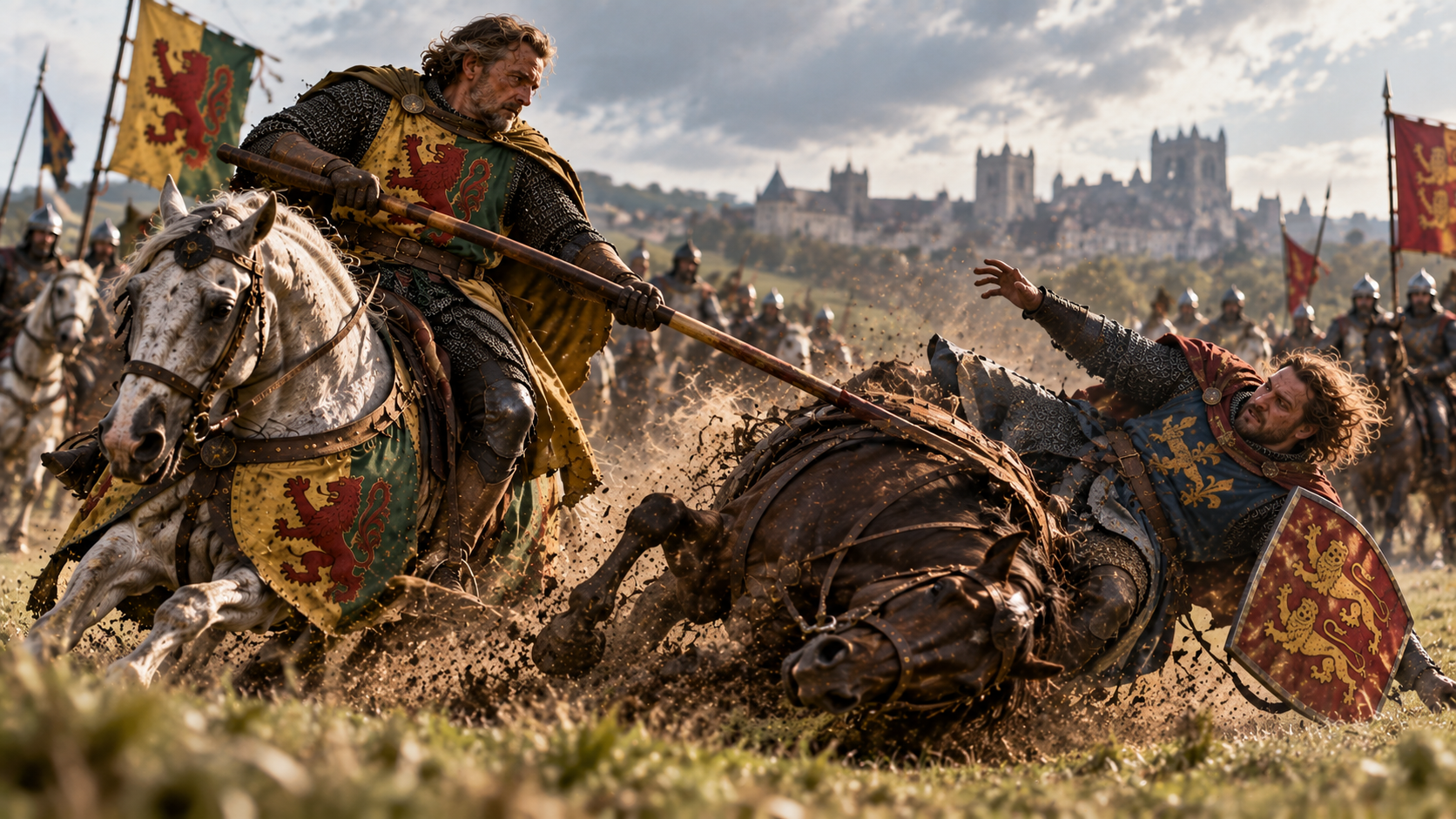
In 1189 Henry II was at war with his son Richard, who had allied with Philip II of France.Marshal fought for the old king.During the retreat from Le Mans, Marshal encountered Richard. The future Lionheart was exposed. Marshal charged him.Richard reportedly called out that Marshal should not kill him. Marshal's answer, preserved in his biography, was that the devil could kill him because Marshal would not. He drove his lance into Richard's horse instead.The horse died. Richard did not.Soon afterwards Henry II died and the man Marshal had just fought became King Richard I.This could have been awkward.Instead, Richard kept Marshal close. Whatever else Richard thought about the incident, he understood exactly what kind of soldier he was dealing with. Marshal's rise continued, helped enormously by a marriage Henry II had arranged before his death.The bride was Isabel de Clare, heiress to a vast collection of lands in England, Wales, Ireland and Normandy.The younger son with little prospect of inheritance was now one of the richest magnates in the realm and, through Isabel's inheritance, Earl of Pembroke.
Five kings, one survivor
Marshal's career is often reduced to the line that he served five kings. It is worth naming them because the list explains the scale of his life.Henry II. Henry the Young King. Richard I. John. Henry III.Technically the Young King was crowned during his father's lifetime rather than reigning independently, but he was Marshal's lord and a crowned king. Across those households Marshal witnessed rebellion, crusade, royal captivity, lost continental territories, baronial revolt, Magna Carta and civil war.He was not some spotless storybook knight floating above the politics. He made choices. He changed sides when feudal loyalties and political realities demanded it. He protected his own lands and family. His great biography was commissioned after his death by people with every reason to present him well.That is worth remembering whenever the legend becomes too polished.But there is a reason the reputation survived. Again and again, rulers who knew exactly how dangerous the political world could be trusted Marshal with serious responsibility.Under Richard he served in government while the king was away. Under John he became one of the kingdom's most important magnates and a mediator during the crisis that produced Magna Carta.Then John died, and Marshal was handed the hardest job of his life.
A nine-year-old king and half a kingdom
By October 1216 England was in civil war.John's conflict with his barons had brought Magna Carta at Runnymede in 1215, but the settlement collapsed almost immediately. Pope Innocent III annulled the charter. Rebel barons invited Prince Louis, son of Philip II of France, to take the English throne. Louis landed in 1216 and was accepted in London.Then John died.His son Henry was nine.The royal cause needed someone with enough military reputation to command the loyalists, enough political standing to negotiate with the barons and enough credibility to make people believe the boy king's government might be different from his father's.The king's council chose William Marshal as guardian of Henry and the realm.One of his first important moves was political rather than military. Henry's government reissued a revised Magna Carta in November 1216 under the seals of Marshal and the papal legate. The message was clear enough: John was gone, Henry was a child, and the grievances that had driven barons into rebellion did not have to die with the old king.Support began to move back towards Henry.But Prince Louis was still in England.So the old tournament fighter had one more battle to fight.
Lincoln, 1217
The royalists gathered at Newark in May 1217 and marched for Lincoln.The city was held by the French and rebel forces, but Lincoln Castle remained loyal to Henry under the formidable castellan Nichola de la Haye. Marshal's army needed to break the siege.The battle was fought on 20 May.Royalist troops entered the city and attacked the rebel force. Marshal, despite his age, took part in the fighting. The royalists won decisively. Leading rebel barons were captured, exactly the sort of outcome that would have been instantly familiar to a man who had spent his youth making money by capturing knights on tournament fields.Lincoln did not end the war by itself. Louis still had forces in England and hoped for reinforcements from France. But after Hubert de Burgh's fleet defeated the French off Sandwich in August, Louis' position collapsed.A settlement followed. Louis renounced his claim and left England.Marshal had helped keep the Plantagenet crown on the head of a nine-year-old boy.
The greatest knight in the world
William Marshal died in May 1219. Near the end of his life he was admitted to the Knights Templar and was buried in the Temple Church in London, where his effigy can still be seen. At his funeral, Archbishop Stephen Langton described him as the greatest knight in the world of their time. That line is the reason the headline still works eight centuries later. It was not invented by a Victorian biographer or a modern documentary producer. People close to Marshal's own age were already building that reputation around him.We should still leave a little space between the man and the legend. Much of what makes Marshal vivid comes from the History of William Marshal, a long verse biography commissioned by his family after his death. It is an extraordinary source, but not an impartial one.Perhaps that makes him more interesting.The real William Marshal did not need to be a perfect knight. He was a professional fighter who became rich through tournaments, a courtier who survived one of Europe's most combustible dynasties, a landowner, husband, father, magnate and politician. He knew when to fight, when to negotiate and, apparently, when not to put a lance through the future King of England.Then, in his seventies, when England's child king needed an army, he climbed back into the saddle.Ser Duncan the Tall gets to live in a world built to contain knights like him.William Marshal had to do it for real.