What makes a great opening scene?
Raiders of the Lost Ark and Up show two very different ways to make an audience care in the first minutes.
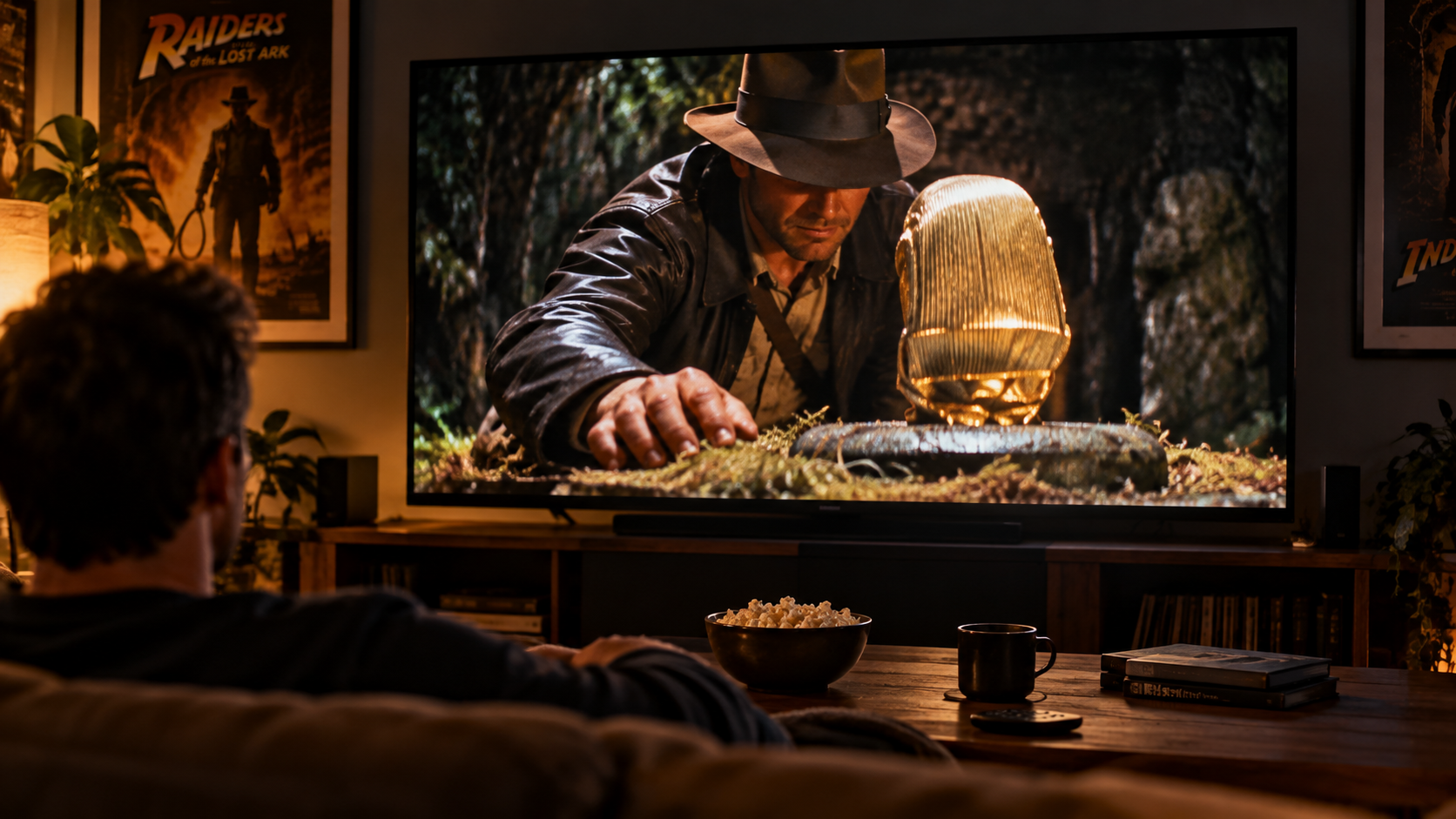
A man whose face can wait
At the beginning of Raiders of the Lost Ark, we see pieces of Indiana Jones before we properly meet him: the hat, the clothes, the movement through the jungle. The face is withheld while the figure acquires importance.
It is a wonderfully confident introduction. Steven Spielberg's film doesn't begin by asking us to memorise a biography. It lets us watch a man do something.
This piece discusses that opening adventure and the early marriage montage in Pixar's Up, including its loss. If you want either preserved, watch first. They are two very different answers to the same problem: why should we give these people our attention?
Competence is more interesting with a limit
Raiders gives its hero a task inside a dangerous place. The opening's temple and idol promise expertise, but expertise does not make everything cooperate. Observation, caution and quick reactions sit beside mistakes and escapes. Lucasfilm on the character's introduction.
That mixture is the attraction. A person who knows nothing would be difficult to trust. A person who controls everything would leave little to worry about. Indy is capable enough to follow and vulnerable enough to make following him exciting.
The famous physical dangers also give the sequence a clear language. You can understand a threatening gap or a closing route without knowing the history of the artefact. The environment supplies problems the body must solve.
The information comes at the moment it becomes useful. We don't need a briefing on every hazard before entering. We notice something, see his response and revise our expectations. The film is already teaching us how to watch it.
That is my case for this opening: it establishes the pleasure of the film while allowing the hero to be fallible. The promise is not that he will always have a plan. It is that watching him deal with the absence of one will be worth our time.
Another film gets there by staying home
Up takes a different route. After introducing Carl and Ellie as children, its early Married Life montage moves through their life together, ending in Ellie's death. It gives years to a sequence that feels both swift and painfully substantial. Disney/Pixar's official script-to-screen resource.
The ordinary details do much of the work. Shared routines and familiar spaces let us feel continuity while the people change. We aren't simply being told that Carl loved somebody. We are being given enough of their life to understand the shape of her absence.
The music carries feeling across those changes without needing the couple to explain themselves. Where Raiders builds attention through immediate uncertainty, Up makes ordinary things accumulate meaning.
A house or a chair can then carry more than its physical presence. We have seen what it belonged to. Later resistance to change needn't look like a random personality flaw; the opening has given us a reason to look more carefully.
The question underneath the spectacle
There is no useful contest between a dangerous temple and a marriage. Each opening succeeds by making the coming story matter in its own terms.
The comparison does reveal why “start with action” is an incomplete instruction. Movement can be empty. So can an emotional backstory. What matters is how the scene gives us a relationship with the person at its centre.
When you next watch an opening, notice what you know when it ends that you didn't know when it began. Then notice what you want to know next. Those answers need not be plot facts. You may simply want to spend more time with someone, or understand why they cannot let something go.
A great opening has already changed the terms on which you are watching. The film no longer has your attention merely because you pressed play.