Watches that are interesting before they are expensive
Forget status for a moment. The most interesting watches are often interesting because of what they were built to do, who used them or how they work.
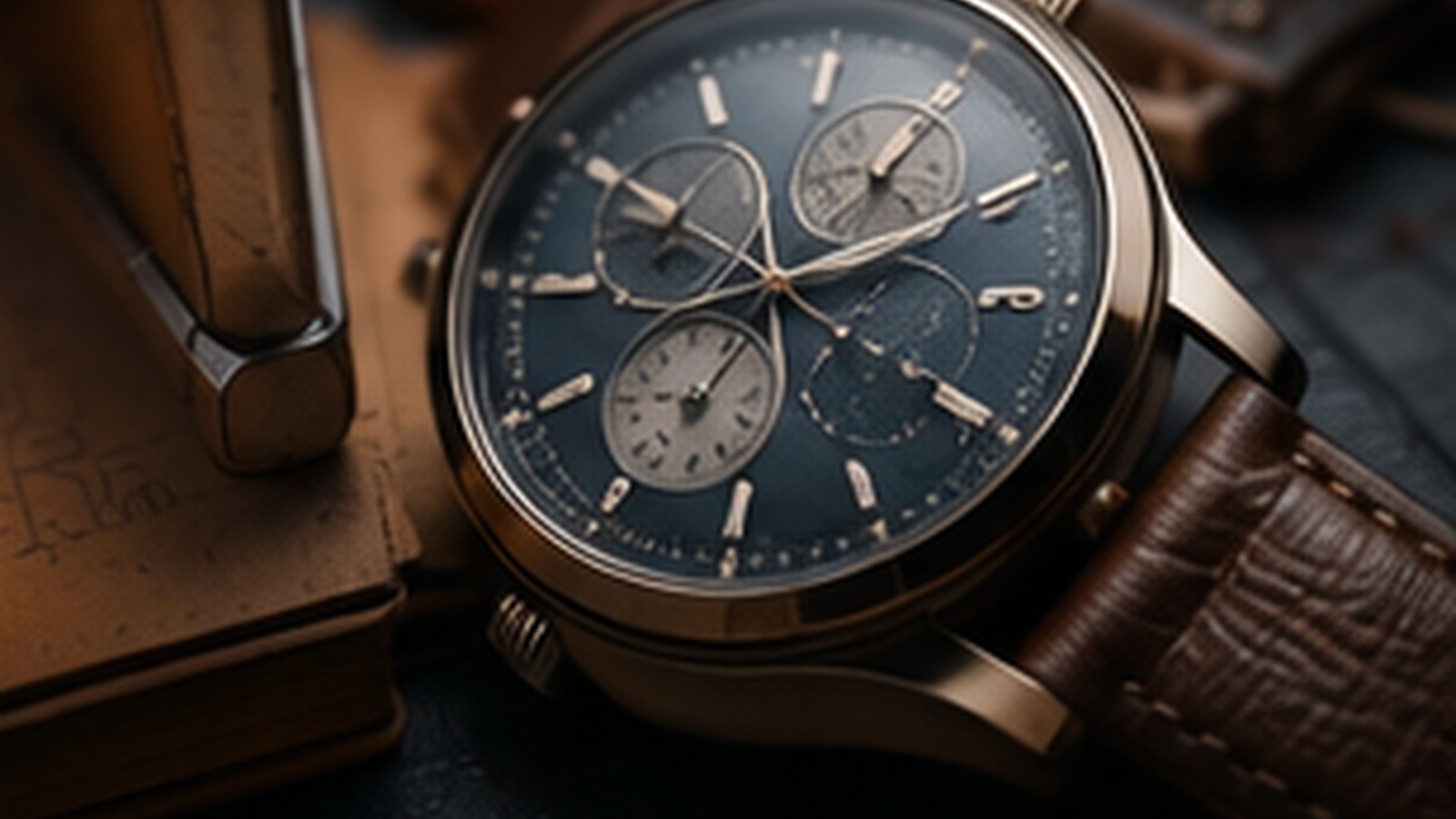
There is a point in the watch world where things become slightly unhinged.
A perfectly pleasant steel wristwatch can cost £500, £5,000 or £50,000. Keep going and eventually you're discussing objects priced like houses.
Which can give the impression that getting interested in watches requires getting interested in expensive watches.
It doesn't.
A £20 Casio can be interesting. So can a mechanical Seiko, an old military watch or a battered chronograph.
The trick is to stop asking “How much is it worth?” and start asking “Why is it like that?”
That's when watches get good.
Start with what it was for
A lot of familiar watch design exists because somebody once needed to do something.
A dive watch needs to be readable underwater and able to time how long a diver has been down. That rotating bezel isn't there simply because it looks good.
Pilot watches emphasised legibility because knowing the time quickly mattered in a cockpit.
Field watches needed to be tough, simple and easy to read.
Chronographs put a stopwatch on your wrist.
Over time, these tools became styles. Most people wearing dive watches today aren't about to disappear beneath the North Atlantic, and your pilot's watch is unlikely to see much action beyond seat 14A on an easyJet flight.
But the original purpose remains in the design.
Once you know what you're looking at, those details stop being decoration.
They become clues.
The cheap digital watch that basically solved timekeeping
Consider the Casio F-91W.
It is small, plastic, digital and gloriously uninterested in luxury.
It tells you the time. It has an alarm, stopwatch and little light. Its battery can last for years. You can buy one for the price of lunch.
As an object for knowing what time it is, it is difficult to argue that civilisation desperately needed to go much further.
And yet we did.
Which tells you something important about watches.
We don't really need them anymore.
Your phone already knows the time with extraordinary accuracy. Watches survived because they became something else too: design objects, bits of engineering, pieces of history and small expressions of taste.
The F-91W is interesting precisely because it sits at the opposite end of that argument.
Cheap. Useful. Recognisable. Job done.
Mechanical watches are wonderfully unnecessary
A mechanical watch approaches the same problem very differently.
There is no battery.
Energy stored in a wound spring is released through a collection of tiny gears and components, regulated by an oscillating balance wheel, all to move a few hands around a dial at approximately the correct speed.
Approximately matters.
A cheap quartz watch will generally keep better time than a mechanical watch costing vastly more.
Objectively, quartz won.
And yet there is something captivating about looking through the back of a mechanical watch and seeing the machine working.
A rotor moves as your wrist moves. Gears turn. The balance oscillates backwards and forwards.
You are carrying around a tiny machine whose sole purpose is to measure something your phone can tell you instantly.
That glorious redundancy is part of the appeal.
Then you start noticing details
This is how the trouble begins.
At first you see a watch.
Then you start noticing the typeface.
The shape of the hands.
The way the case curves into the lugs.
Whether the crown is guarded.
The colour of the luminous paint.
The satisfying click of a rotating bezel.
The tiny difference between a polished surface and a brushed one.
You discover that two watches which look almost identical to everyone else can feel completely different once you know what you're looking at.
This is true of lots of good objects.
Knowledge increases resolution.
Buy the story you like
Perhaps this eventually leads you to an expensive Swiss watch.
Fine.
But it doesn't have to.
You might like the straightforward mechanical engineering of a Seiko. The military origins of a field watch. The almost indestructible usefulness of a G-Shock. An old watch that belonged to your father. A strange Soviet watch you found online because you disappeared down a historical rabbit hole one Sunday afternoon.
That's the enjoyable bit.
There is always another mechanism, design decision, manufacturer or peculiar bit of history to discover.
Price can be part of watches.
It just isn't the most interesting part.
A good test is whether you can explain why you love the thing on your wrist without once mentioning what it cost.