The patients who got better after surgery that never happened
A placebo-controlled surgery trial asked an uncomfortable question: how do you know the operation itself caused the improvement?
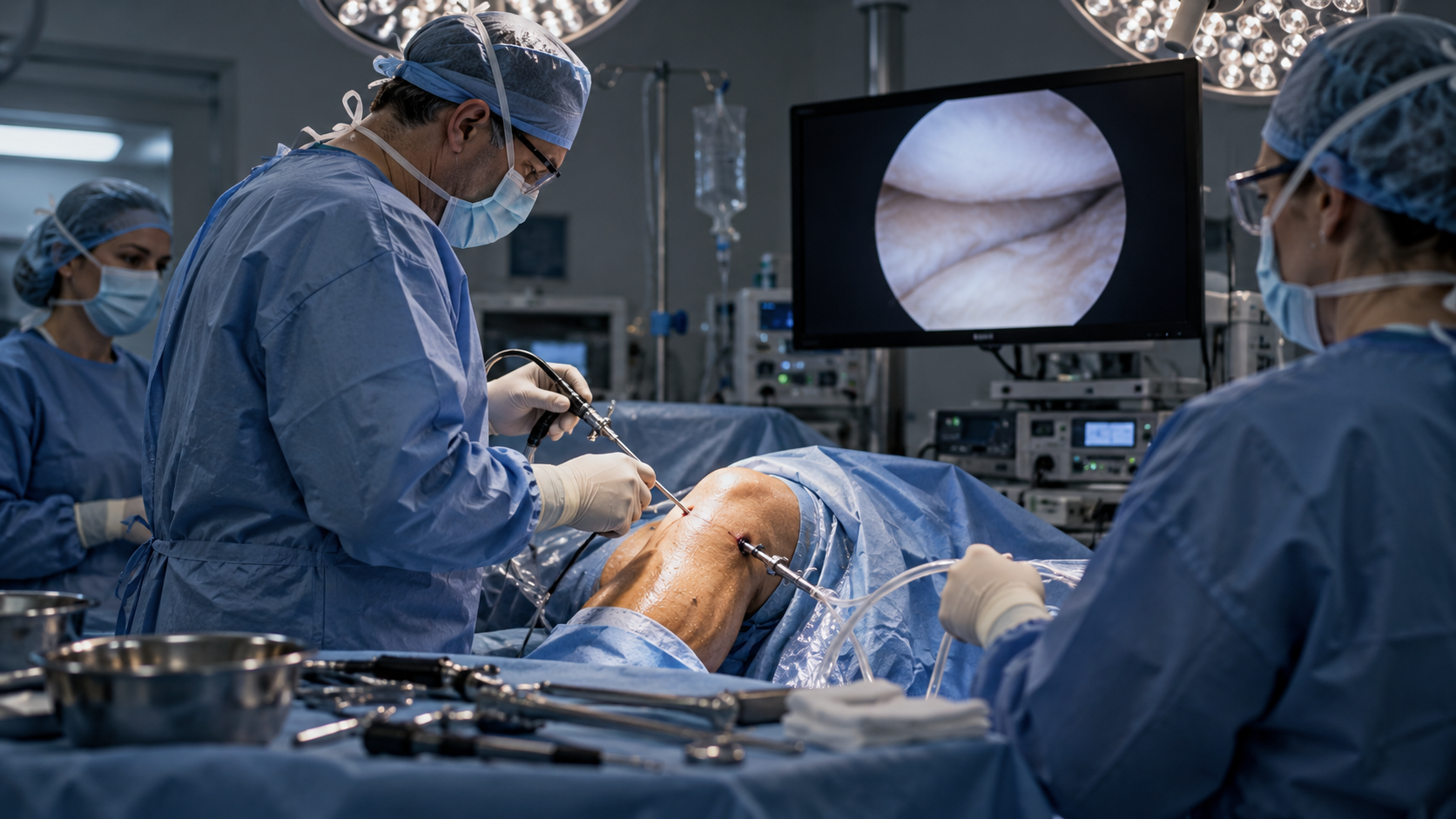
Opening
The patient was taken into an operating theatre. His knee was cleaned and draped. He was sedated. The surgeon made three small incisions in the skin.
Then came the theatre performance.
The surgeon asked for instruments. The knee was manipulated as if an arthroscope were inside it. Saline was splashed to imitate the sounds of washing out the joint. The patient stayed in theatre for about as long as a real procedure would take.
But no arthroscope entered his knee.
He had received placebo surgery.
A difficult control group
In 2002, J. Bruce Moseley and colleagues published a trial in the New England Journal of Medicine involving 180 people with osteoarthritis of the knee.
The question was whether two common arthroscopic procedures, lavage and debridement, were actually responsible for the relief patients reported afterwards.
Testing a tablet against a sugar pill is one thing. Testing an operation against a convincing imitation of an operation is another.
The volunteers knew exactly what they were signing up for. The consent process explicitly told them they might receive placebo surgery and that, if they did, there would be no surgery on the knee joint itself.
They were randomly assigned to three groups: arthroscopic debridement, arthroscopic lavage, or the simulated procedure.
The placebo group still went through something very real. They entered hospital. They were sedated. Their skin was cut. They heard and felt enough of an operation to make the deception credible. Nurses caring for them afterwards did not know which treatment they had received.
Then they followed everyone
If the physical work inside the joint was doing the useful part, the genuine surgery groups should have pulled ahead.
They did not.
Over two years of follow-up, the researchers found that the arthroscopic lavage and debridement groups did no better than the placebo group on the study's pain and function outcomes.
That finding does not mean surgery is imaginary, or that every operation can be replaced by theatre noises and three cuts in the skin. It answered a much narrower question about these procedures in this group of patients with knee osteoarthritis.
But it exposed a problem that sits underneath a lot of everyday reasoning.
A patient has treatment. The patient improves. Therefore the treatment caused the improvement.
Maybe.
Symptoms can change naturally. Expectations matter. Attention and care matter. People can improve for reasons that have little to do with the mechanism everyone assumed was doing the work. Without a proper comparison, the before-and-after story can look far more certain than it is.
The strange power of a fair comparison
There is something almost brutal about the design of the study. It strips away the comforting parts of the story one by one.
The hospital was real. The surgeon was real. The incisions were real. The recovery experience was real. The belief that something had been done was real.
The missing thing was the thing being tested.
Surgical placebo trials raise serious ethical questions because the control procedure can carry risk without offering the intended therapeutic intervention. That is one reason they are unusual.
Which makes this trial hard to forget.
Sometimes the only way to discover what is doing the work is to build a comparison that feels almost absurdly similar, then remove one thing.
And see what changes.