The Greatest Warriors in Fantasy on Screen
Aragorn, Geralt, Jon Snow, Brienne, the Hound, Legolas and a dangerously large collection of people with swords. We settle nine different arguments about what makes a great fantasy warrior, using only what they actually do on screen.
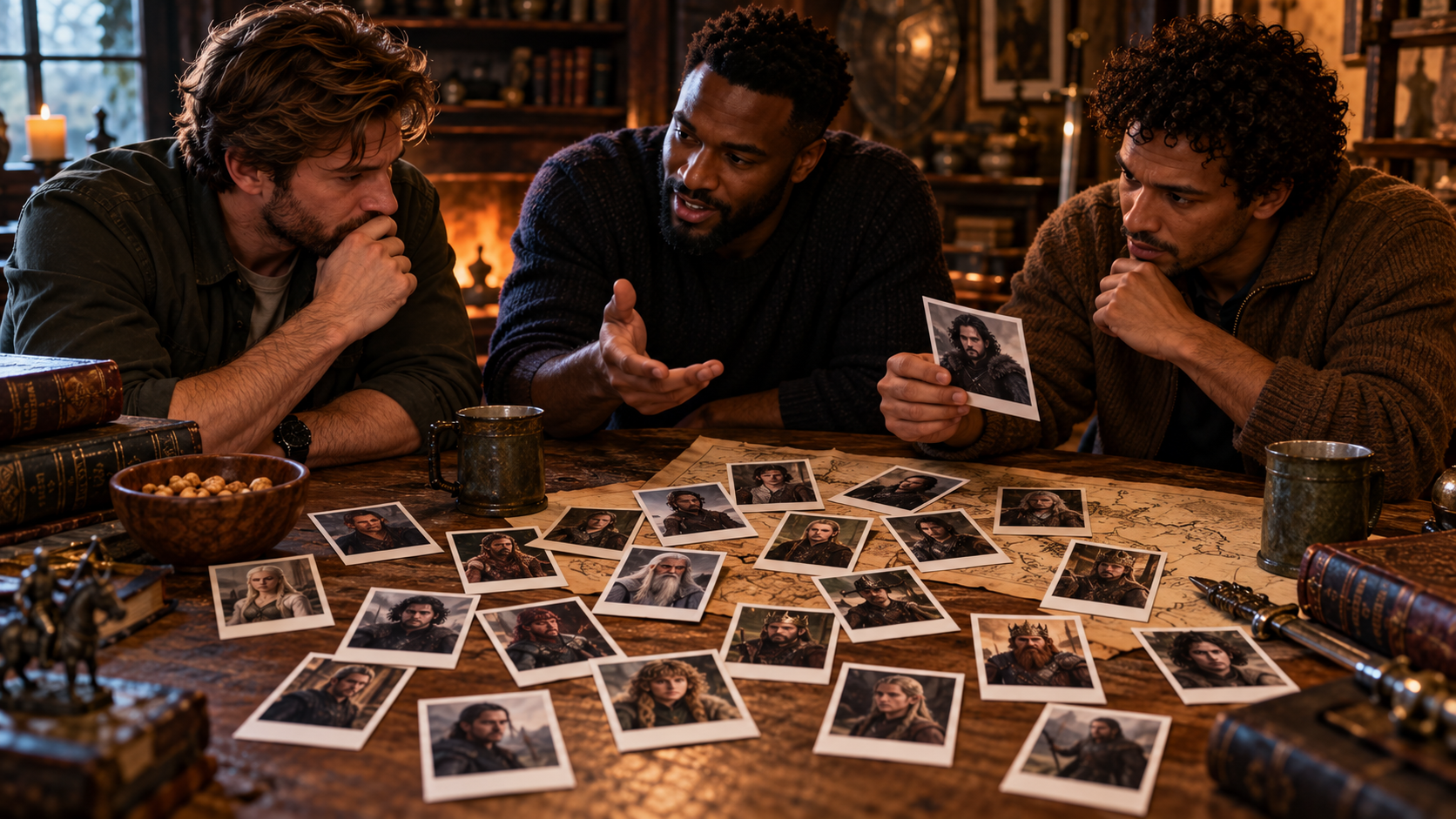
Nine arguments worth having
There are two bad ways to answer the question “Who is the greatest fantasy warrior?”
The first is to start counting fictional kills as though Opta has opened a Middle-earth desk. The second is to say “it depends” until everybody gets bored and orders another drink.
We are doing neither.
A warrior can be great in different ways. Geralt approaches violence like a tradesman arriving to fix a boiler that happens to have teeth. Jon Snow is at his best when everything has gone catastrophically wrong. Bronn regards the rules of a fair fight as useful information about what his opponent expects him not to do. Brienne wants to be the knight that the actual knights keep failing to be.
So: nine categories. Three contenders in each. Live-action screen fantasy only. Books and games do not get to smuggle in extra feats. Magic can help, but you still need to fight. And every category gets a winner.
Some of these will annoy you. Good.
THE LORD: Aragorn vs Jon Snow vs Tywin Lannister
Tywin Lannister can silence a room by entering it. He commands armies, understands power and has the strategic ruthlessness to destroy enemies without giving them the courtesy of a battle. But “warrior-leader” is the catch. Game of Thrones shows us the leader far more than the warrior. His authority is formidable; his sword arm is mostly a matter of reputation.
Jon Snow has the opposite CV. We see him in the mud. He leads the defence of the Wall, goes to Hardhome knowing the political risk, fights through the Battle of the Bastards after his plan has collapsed and repeatedly puts himself where the killing is thickest. Men follow Jon because they have watched him share their danger. His weakness is judgement. Charging alone at the Bolton line because Rickon has died is emotionally understandable and militarily dreadful.
Then there is Aragorn.
He fights the Uruk-hai at Amon Hen, leads the defence at Helm’s Deep, rides out with Théoden when the keep appears lost, takes the Paths of the Dead, commands at the Black Gate and, crucially, keeps acquiring followers without demanding that anybody admire him. His authority grows from competence, restraint and the fact that he is usually standing exactly where he has asked everyone else to stand.
Tywin has authority. Jon earns loyalty. Aragorn combines the battlefield ability with judgement and the willingness to carry responsibility.
WINNER: ARAGORN. If the world is ending and somebody has to lead the remaining army towards a gate full of orcs, you want the man who says “For Frodo” and goes first.
THE PROFESSIONAL: Geralt vs Lan Mandragoran vs Aragorn
Lan Mandragoran looks like somebody who has spent his entire adult life expecting an ambush. In The Wheel of Time he is disciplined, economical and extremely difficult to surprise. When the series gives him room to fight, particularly against multiple opponents, there is very little wasted movement.
Aragorn has the same quality. He tracks, scouts, reads terrain, uses bow, sword and knife, knows when to run and has decades of experience hidden behind Viggo Mortensen’s weather-beaten face.
Geralt, though, is literally a professional.
The Blaviken fight in The Witcher is the exhibit. Geralt does not look excited. He looks busy. He closes distance, controls weapons, changes angles and works through armed men with the horrible efficiency of somebody performing a task he understands better than they do. Monsters make the job broader: preparation, potions, signs, tracking, anatomy, deciding whether the monster is actually the monster.
He is not unbeatable. That helps his case. Geralt gets hurt because the work is dangerous, adapts because he has to, and knows more than one answer to a problem.
WINNER: GERALT OF RIVIA. Aragorn could do the job. Lan would be terrifyingly reliable. Geralt would ask what kind of monster it is, check the tracks, complain about the fee and get on with it.
THE NATURAL: Legolas vs Arya Stark vs Daemon Targaryen
Arya earns almost everything. Syrio gives her the beginnings of Water Dancing. The Hound gives her an education in how ugly real violence is. The Faceless Men turn speed, observation and deception into weapons. By the time she spars with Brienne at Winterfell, the tiny girl with Needle can make one of the strongest fighters in Westeros take her seriously.
Daemon Targaryen has the swagger of a man who assumes combat will become entertaining once he arrives. In the Stepstones he turns a supposed surrender into a solo charge through volleys of arrows, reaches the enemy positions and keeps killing until reinforcements arrive. It is reckless, theatrical and extremely Daemon.
Legolas is just unfair.
He can shoot while moving, shoot from horseback, use two knives at close quarters, see threats before everyone else and move across battlefields as though gravity is a guideline. At Helm’s Deep he transitions between bow and blades without the slightest sense that one is his secondary weapon. At the Pelennor Fields he climbs an oliphaunt, kills its crew and brings the animal down, then slides off the collapsing body because apparently simply surviving it would lack finish.
Somebody will now mention the shield-surfing. The court accepts this evidence.
WINNER: LEGOLAS. Arya became lethal. Daemon was born confident. Legolas appears to have been issued combat coordination at character creation.
THE KNIGHT: Brienne vs Barristan Selmy vs Aragorn
Barristan Selmy is the knight other knights talk about. Even late in life, Game of Thrones lets us see enough to know the reputation is not empty. When the Sons of the Harpy surround him in Meereen, the old man kills several before he is overwhelmed.
Aragorn is not technically a knight in the Westerosi sense, which makes his inclusion useful. He protects the weak, keeps his word, serves before he rules and repeatedly chooses responsibility when walking away would be easier.
But this category belongs to Brienne of Tarth.
Brienne spends much of Game of Thrones being mocked by men who possess the title she understands better than they do. She swears to Catelyn Stark, carries that duty beyond Catelyn’s death, searches for Sansa, protects Podrick and treats an oath as something that remains binding when nobody is there to reward you for keeping it.
She can also fight. She defeats Loras Tyrell in Renly’s melee, survives a savage fight with the Hound and later receives knighthood from Jaime in one of the series’ rare moments where the ceremony catches up with the truth.
WINNER: BRIENNE OF TARTH. Barristan has the legend. Aragorn has the virtues. Brienne spends years living the code while people tell her she cannot have the title.
THE SURVIVOR: Jon Snow vs The Hound vs Geralt
Geralt survives monsters, mages, political disasters and an impressive number of people who decide that attacking the witcher is a sensible career move. His enhanced physiology helps, so the rest of the field is entitled to complain.
The Hound survives childhood mutilation, the Battle of the Blackwater, infection after Brienne leaves him broken, life with the Brotherhood and finally the collapse of a burning castle while fighting his undead brother. Technically that last one rather ends the survival streak, but what a streak.
Jon Snow has an inconvenient advantage in a category called Survivor: he actually dies.
Normally that would disqualify you.
Instead, Jon is murdered by his own brothers, resurrected, nearly trampled and suffocated beneath bodies at the Battle of the Bastards, fights the dead at Hardhome, goes beyond the Wall again, survives dragonfire-adjacent chaos at Winterfell and ends the series walking north.
More importantly, Jon adapts. The pampered bastard who arrives at Castle Black has to learn that the other recruits did not grow up with a master-at-arms. The Night’s Watch officer learns to work with wildlings. The man who loses Ygritte keeps going. The commander murdered by his own men keeps going, admittedly after a short medically unavoidable pause.
WINNER: JON SNOW. Being killed and still winning the Survivor category feels like cheating. It also feels very Jon Snow.
THE KILLER: Bronn vs The Hound vs Daemon Targaryen
The Hound is frightening because he has strength, experience and almost no romantic ideas about violence. Daemon has the aggression to turn himself into the weapon and a dragon parked nearby when subtlety fails.
Bronn understands something purer.
At the Eyrie, Ser Vardis Egen arrives for Tyrion’s trial by combat dressed like a proper knight: armour, shield, sword, honour. Bronn arrives dressed to move.
Then he refuses to give Vardis the fight Vardis wants. He backs away. Uses the room. Lets the armoured knight chase him. Knocks things into his path. Waits for him to tire. When Vardis is vulnerable, Bronn kills him.
Asked whether he fights with honour, his answer is effectively visible on the floor.
That scene tells us almost everything. Bronn is not interested in demonstrating that he is the better swordsman. He wants to be the man still alive when the fight ends. Later he uses terrain, timing, surprise and whatever weapon solves the immediate problem. He is even capable of the killer’s most underrated skill: deciding that a fight is not worth having.
WINNER: BRONN. If there are rules, Bronn wants to know them so he can work out which one you are relying on.
THE SWORDSMAN: Legolas vs Arthur Dayne vs Geralt
Legolas is here because those twin knives are not decorative. When enemies close the distance, he is fast, ambidextrous and absurdly coordinated.
Arthur Dayne gives us one scene.
Unfortunately for everyone else, it is quite a scene.
At the Tower of Joy, Dayne draws two swords and dismantles Ned Stark’s group. He kills multiple opponents, handles attacks from different directions and eventually disarms Ned. He loses because Howland Reed stabs him from behind, not because somebody beats him blade to blade. The show has spent years telling us the Sword of the Morning was exceptional, then finally supplies the receipt.
But Geralt gives us hours of receipts. Blaviken alone is a showcase of distance, timing and control. Across the series he fights humans and creatures with different weapons, speeds and anatomies. The choreography repeatedly presents his swordsmanship as a practiced system rather than a special move.
This is horribly close.
WINNER: GERALT OF RIVIA. Dayne may have the higher mythical ceiling, but the rule is what we see. Two magnificent minutes cannot quite beat seasons of Geralt solving lethal problems with a blade.
THE WARRIOR: Legolas vs Jon Snow vs Aragorn
Now remove the specialist labels.
Legolas is probably the most naturally gifted combatant here. His awareness is ridiculous, his ranged ability is unmatched among the three and when the battlefield becomes chaotic he seems to get better.
Jon Snow has the ugliest body of evidence. The Wall. Hardhome. The Battle of the Bastards. The frozen-lake expedition. Winterfell. He gets knocked down, disarmed, buried in bodies and repeatedly forced into fights where the plan has ceased to exist. At Hardhome he discovers in real time that Longclaw can kill a White Walker and has the reactions to exploit it. Against Ramsay’s cavalry he stands alone, draws his sword and prepares to take the charge because there is nothing else left to do.
Aragorn has fewer moments of outright panic because he is so often the person preventing panic from spreading. He fights Uruk-hai alone at Amon Hen, survives the warg attack and fall before Helm’s Deep, fights through the siege, goes through the Paths of the Dead and stands before the Black Gate knowing the entire battle is a diversion.
The difference is completeness.
Legolas is the more outrageous athlete. Jon has perhaps endured the nastier sequence of disasters. Aragorn can scout, track, shoot, fight at close quarters, command, improvise and continue making good decisions while exhausted and surrounded.
WINNER: ARAGORN. If you need one person for the battle and you are not allowed to know what kind of battle it will be, take Aragorn.
THE BRUTE: The Hound vs The Mountain vs Tormund Giantsbane
Gregor Clegane is what happens when a siege engine develops personal grievances. He crushes Oberyn Martell’s skull with his hands. Even before Qyburn turns him into something worse, his size changes the geometry of every fight.
Tormund Giantsbane brings a different energy. He is strong, fearless and appears genuinely delighted when battle becomes sufficiently stupid. He fights through the Wall, Hardhome, the Battle of the Bastards and the war against the dead with the cheerful aggression of a man whose preferred tactical formation is “near the front”.
The Hound sits beautifully between them.
Sandor is enormous without being so enormous that movement becomes optional. He has real swordsmanship, a lifetime of fighting experience and enough aggression to make sensible people reconsider whatever point they were trying to prove. His fight with Brienne is a masterpiece of two exhausted professionals gradually abandoning elegance and trying to beat the other person into the landscape.
The Mountain is bigger. Tormund may be madder.
The Hound is the one I least want walking towards me because he combines brute force with the deeply irritating ability to actually fight.
WINNER: THE HOUND. Gregor is the monster under the bed. Sandor is the monster who knows how to use a sword.
Nearly made it
Jaime Lannister is the obvious complaint.
At his peak, everybody in Westeros seems to agree that Jaime is one of the finest swordsmen alive. The problem is our rule. We see relatively little of two-handed, prime Jaime at full capacity. His muddy, chained duel with Brienne is impressive given his condition, but it is not enough to hand him The Swordsman on reputation alone.
Oberyn Martell deserves a drink and a warning label. Against the Mountain he demonstrates speed, reach, footwork and tactical intelligence, and essentially wins the fight before making the catastrophic decision to turn victory into an interrogation.
Grey Worm is an excellent professional soldier and commander, but the Unsullied are strongest as a formation and this exercise rewards individual screen evidence.
Boromir has one of fantasy cinema’s great last stands. He keeps fighting Uruk-hai after taking arrows that would make most people reconsider the afternoon. The field is simply vicious.
Éowyn kills the Witch-king, which is a better single line on a combat CV than most fictional warriors will ever get. But fighting is not consistently central enough to her screen role for these categories.
And yes, there are dragons, wizards, elves, witchers and resurrected men in here. That is why the rule was never “who would win in a neutral arena?” Fantasy does not contain neutral arenas. It contains collapsing castles, undead armies, inconvenient prophecies and people discovering halfway through a fight that the other bloke has Valyrian steel.
The final card
So the drinks-table verdict is in.
The Lord: Aragorn.
The Professional: Geralt of Rivia.
The Natural: Legolas.
The Knight: Brienne of Tarth.
The Survivor: Jon Snow.
The Killer: Bronn.
The Swordsman: Geralt of Rivia.
The Warrior: Aragorn.
The Brute: The Hound.
No overall champion. That would ruin the argument.
Besides, the interesting bit was never deciding whether Aragorn could beat Geralt in a car park. It was noticing that fantasy gives us completely different versions of what being dangerous can look like.
Geralt makes it a craft. Bronn makes it practical. Brienne gives it a code. Jon simply refuses to remain down. Legolas makes it look offensively easy.
And Aragorn wins two categories because, frankly, there are only so many ways to watch a man fight through three films, lead armies, track orcs across Rohan and charge the Black Gate before admitting he is quite good at this.