The bomber that was too complicated to fly
The crash of Boeing's Model 299 helped push aviation towards a deceptively simple tool: the checklist.
Opening
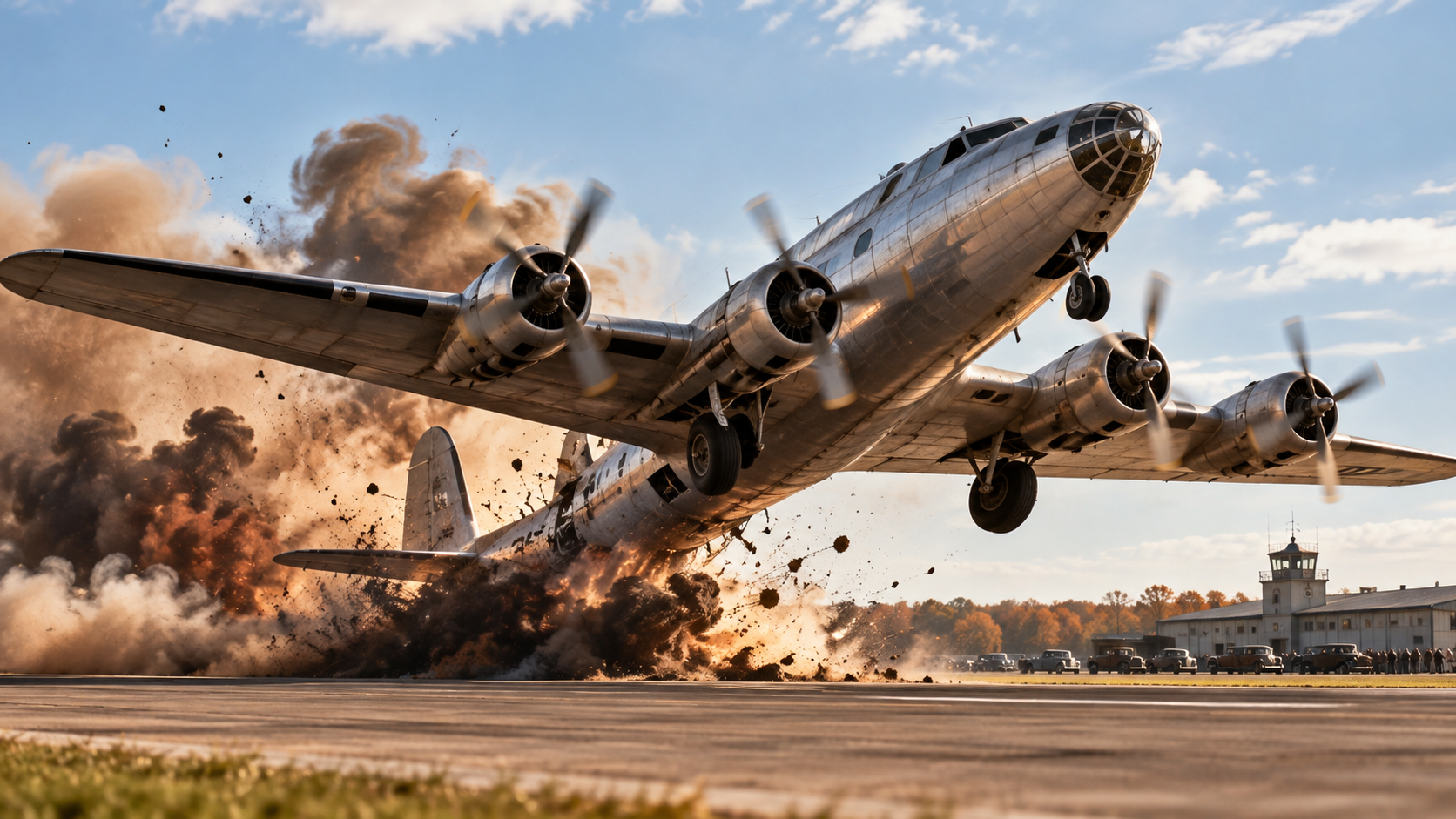
On 30 October 1935, Boeing's new four-engined bomber rolled down the runway at Wright Field in Ohio.
It climbed to about 300 feet.
Then it stalled, turned, crashed and burned.
The man at the controls, Major Ployer P. Hill, was not an amateur overwhelmed by a difficult machine. He was an experienced test pilot.
The aircraft had taken off with its elevator and rudder controls locked.
A machine with more to remember
Boeing's Model 299 was a serious leap in complexity. Four engines, a larger airframe, retractable landing gear, new systems and more controls meant more things had to happen in the right order.
Before take-off, gust locks used on the ground to stop control surfaces being battered by the wind had to be released.
On that October morning, they were not.
The crash killed Hill and Boeing's chief test pilot, Leslie Tower, and badly damaged the aircraft. It also threatened Boeing's prospects in the Army Air Corps bomber competition.
The easy explanation would have been pilot error.
Technically, it was. A vital step had been missed.
But that description does not solve much. If a highly experienced crew can miss a simple but catastrophic step, telling the next crew to be more careful is not much of a system.
A piece of paper
What followed became part of aviation culture: the checklist.
Pilots broke complicated phases of flight into short sequences of things that must be confirmed. Controls. Instruments. Fuel. Trim. Locks. The exact lists changed with aircraft and procedure, but the underlying idea was almost embarrassingly plain.
Do not rely on memory for everything that matters.
That is not an insult to expertise. It is a response to what expertise actually looks like in a complicated environment.
An expert pilot knows vastly more than a card can contain. The card exists because knowing something and remembering to do it at exactly the right moment are different problems.
Modern cockpits are built around layers of procedure, cross-checking, call-outs and checklists. They are not there because pilots are incapable of thinking. They free pilots to think while protecting them from the small omissions that thought, stress and familiarity can produce.
The wrong question
There is a habit we have when something goes wrong.
Who messed up?
Sometimes that is exactly the right question. Negligence exists. People ignore rules. Bad decisions have consequences.
But the Model 299 story suggests another one.
What made this mistake possible?
A forgotten control lock can be described as an individual's failure. It can also be treated as information about the design of the job.
One approach looks for a better person.
The other reaches for a pencil and starts writing a list.