The Best Friend You Didn't Know You Needed
On paper, dog ownership is an appalling transaction: money, inconvenience, wet walks, ruined plans and eventual heartbreak. Yet the demands of looking after a dog can quietly bring movement, routine, neighbourhood conversations, companionship and a surprising amount of laughter into a life.
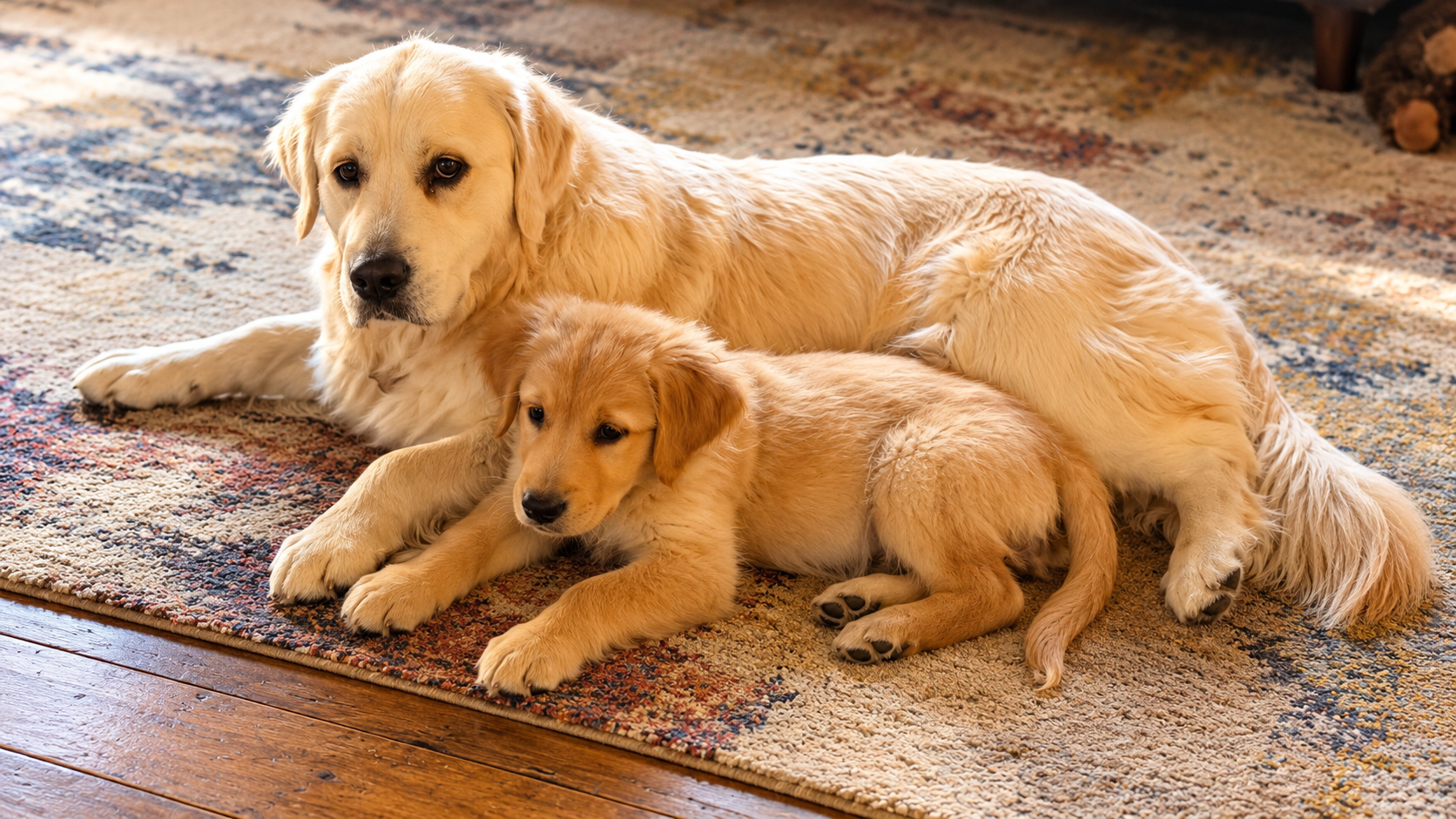
An appalling transaction
Imagine pitching dog ownership to somebody who has never heard of it.
First, you acquire an animal that cannot pay rent.
You buy its food. You insure it. You pay somebody to cut its claws because it has decided that allowing you to do this would compromise the relationship. You arrange weekends around it. Holidays become a logistics problem. Your house acquires hair in places that appear physically inaccessible to hair.
Then there are the walks.
Every day. Often more than once. Winter included.
The dog does not care that it is dark, raining sideways and you have just sat down. It has spent the last forty minutes watching you with increasing concern because you seem to have forgotten the central appointment in both your diaries.
You go outside.
At some point it will probably eat something disgusting, roll in something worse, steal food it has been explicitly told not to steal and develop a sudden medical problem at 6.12pm on a Sunday.
If all goes well, you get years of this.
Then comes the truly terrible part. Dogs do not live as long as we do.
On a spreadsheet, the proposal should never get past Finance.
And yet millions of people make the deal. Plenty of them reach the painful end, swear they could never possibly do it again, then a year or two later find themselves standing in a kitchen saying, “No. Off. OFF. That is not your chair.”
There must be something fairly good on the other side of the ledger.
We have been doing this for a very long time
Nobody can give you a neat date for when wolves became dogs. Genetic and archaeological evidence has pushed the relationship deep into prehistory, and the exact timing and pathway remain debated.
The important bit is what happened afterwards.
Dogs became exceptionally good at living in a human world.
Experiments have repeatedly shown that dogs can use human social cues such as pointing and gaze to find things. Researchers still argue about how much of this comes from domestication, development and individual experience, so the tidy story that evolution simply installed a special “understand humans” module is too easy.
But the practical result is sitting in millions of kitchens.
Point at the floor and a dog may look where you point. Change your tone and it notices. Look towards the lead and then towards the door and you may accidentally begin a constitutional process that cannot be reversed.
The relationship can also look remarkably like attachment. In experiments, dogs have behaved differently when their owner is present, using that person as a kind of secure base while exploring or tackling a task. A stranger does not necessarily produce the same effect.
That does not mean your Labrador thinks you are its mother.
It does mean the animal sharing your house is paying unusually close attention to you.
The oxytocin story is good. Possibly too good.
There is a lovely scientific story about dogs and eye contact.
A well-known study found that longer mutual gazing between dogs and owners was associated with changes in oxytocin, a hormone involved in social bonding. The researchers proposed a positive feedback loop: dog looks at human, human chemistry changes, interaction increases, dog chemistry changes.
You can see why newspapers liked it.
The trouble is that later research has been messy. Other studies have failed to find a consistent rise in oxytocin after friendly dog-human interaction, and reviews have raised questions about small samples, measurement methods and the temptation to turn oxytocin into a simple chemical synonym for love.
So your dog may not be hacking your endocrine system every time it stares at you while you eat toast.
The broader finding is safer and, frankly, sufficient: dogs form strong social relationships with particular humans and are unusually attentive to what we do.
You already knew this from trying to open cheese quietly.
The friend who makes you go outside
Here is one benefit of having a dog that requires almost no romance.
It needs walking.
Research generally finds dog owners walk more than people without dogs, although the difference is not enormous and the studies are often observational. A review of 29 studies found dog owners did more walking and physical activity overall, but also noted the obvious complication: not every dog owner actually walks the dog. In the studies reviewed, roughly six in ten did.
This is important because buying a spaniel is not a cardiovascular intervention.
People who choose dogs may already be different from people who do not. Healthier people may be more able to own one. Houses, neighbourhoods, age, income and available green space all matter. Studies that find dog owners living longer cannot simply prove that the dog caused it.
The mechanism we can actually see is less spectacular.
There is a lead hanging by the door.
At 7pm, after a bad day, you may have no interest in going for a walk. The dog has considerable interest. It does not accept that the meeting overran or that you have entered a complicated relationship with the sofa.
So you put your shoes on.
Ten minutes later you are outside.
Sometimes that is the whole trick: another living thing needs you to move, so quite often you move.
A very small social network with a tail
Walk down a street alone and you can pass twenty people without speaking.
Walk down the same street with a dog and the dog may destroy this arrangement in under three minutes.
It stops.
Another dog stops.
There is sniffing.
The humans are now standing two metres apart while their animals conduct an investigation of breathtaking personal intimacy.
Eventually somebody says, “How old is he?”
Congratulations. You have met a neighbour.
Studies have found associations between dog walking and more neighbourhood interaction, and research across several cities has linked pet ownership, particularly dog walking, with measures of social capital and connection. One study of older adults found that time spent dog walking was associated with more frequent social interactions even though dog ownership itself was not directly associated with life satisfaction.
Again, do not make the dog do more scientific work than it can.
A systematic review of pets and loneliness found mixed results. Some studies found less loneliness or social isolation among pet owners; plenty did not. A dog is not a prescription for loneliness and certainly not a substitute for human relationships or mental-health care.
It is, however, an extremely effective conversational loophole.
You may not know the man who lives three streets away.
You know that his black Labrador is called Dave and cannot be trusted near a tennis ball.
That is not friendship. It is not nothing either.
Someone noticed you came home
The dog does not know what you do for a living.
It has no idea whether you are senior enough.
It cannot tell if the presentation went well. Your mortgage rate is of no interest. It has never once wondered whether you are fulfilling your potential.
You came home.
Excellent.
There is an appealing simplicity to being important to another creature for reasons that have almost nothing to do with the scorekeeping of adult human life.
Part of it is dependency. You are the source of food, walks, warmth and access to the garden. We should probably admit that before attributing every wag to some pure spiritual communion.
But dependency does not make the bond unreal. Human relationships contain dependency too.
The dog learns your routines. It recognises the sounds that predict your arrival. It knows when shoes mean a walk and when shoes mean betrayal. It chooses where to sleep, who to follow and when to ask for contact.
And after a day in which several complicated human interactions have gone badly, there is something rather good about opening a door and discovering that one member of the household considers your return the main event.
They are also idiots
This is where research papers on companion animals occasionally undersell the product.
Dogs are funny.
Not in a noble way.
A dog can spend ten minutes barking at a plastic bag, then attempt to eat a dead crab.
It can hear a crisp packet open from two floors away while apparently being unable to hear its own name at the edge of a muddy field.
It will find the most expensive place in the room to be sick.
It can spend years being frightened of the vacuum cleaner, despite accumulating overwhelming evidence that the vacuum cleaner has never once mounted an offensive.
Some dogs steal socks. Some steal entire meals. Some develop a complicated belief that a sofa bought by you for humans is actually their ancestral territory.
They interrupt video calls, stand in doorways, lie precisely where you need to walk and wait until you are holding something heavy before becoming fascinated by the space between your feet.
This matters.
If the case for dogs were merely that they might increase physical activity and facilitate neighbourhood interaction, you could buy a treadmill and join a residents' association.
Neither will steal a sausage from the barbecue and then look genuinely astonished by the accusation.
Routine, whether you wanted one or not
Living with a dog puts small pieces of scaffolding around a day.
Morning. Food. Outside. Evening walk. Dinner. Last trip into the garden while you stand at the back door wondering why this particular patch of grass requires such extensive due diligence.
For somebody living alone, that routine can be especially noticeable. There is another schedule in the house besides your own.
Research around mental wellbeing and pet ownership is much less conclusive than the marketing suggests. Different studies find benefits, no effect or effects that depend heavily on the person and circumstances. Owning an animal can also create stress, financial pressure and restrictions.
But you do not need to claim that dogs cure anything to notice what responsibility does.
Something needs feeding even when you are fed up.
Something needs going outside even when you do not.
Something notices when the normal pattern changes.
The obligation is part of the inconvenience.
It may also be part of the value.
The bill
Eventually the walks get shorter.
The dog that used to launch itself into the car begins to consider the jump. Stairs become a negotiation. You notice grey around a face that you still, somewhere in your head, think of as the puppy that chewed the skirting board.
Sometimes old age is gentle. Sometimes illness arrives first.
And sometimes ownership ends with a decision nobody wanted to make.
Research on pet bereavement confirms something owners do not need confirmed: the grief can be substantial. Reviews also describe a particular difficulty around pet loss because other people may underestimate it. A person can be devastated by the death of an animal and simultaneously feel faintly embarrassed that he is devastated.
There is no need to inflate this into something grander.
You spent years arranging part of your life around a living thing.
Then it was gone.
Of course the house feels wrong.
Never again
Afterwards, people say it.
Never again.
No more vet bills. No more kennels. No more hair. No more 6am walks. Definitely no more standing in a field in February holding a small plastic bag whose contents have radically altered the direction you imagined your life taking.
Most importantly, no more ending.
And for some people, that is exactly what happens. Once was enough.
Others eventually make the terrible deal again.
A new lead appears by the door.
There is food in the cupboard that smells inexplicably worse than the thing eating it. Somebody has moved the shoes somewhere higher. The sofa has acquired a new ownership structure.
It is still a terrible transaction.
Money spent. Plans changed. Thousands of walks. Wet mornings. Mud. Worry. Hair absolutely everywhere. A creature that needs you every day and cannot promise you anything about how long it will stay.
Then you put the other side of the deal on the table.
Years of company. Reasons to go outside. Familiar faces in the neighbourhood. Ridiculous behaviour. A warm weight asleep nearby. The sound of paws when you come through the door.
It starts looking suspiciously good.