The lost art of doing absolutely nothing
We have become remarkably good at filling every empty minute. Perhaps some of them should stay empty.
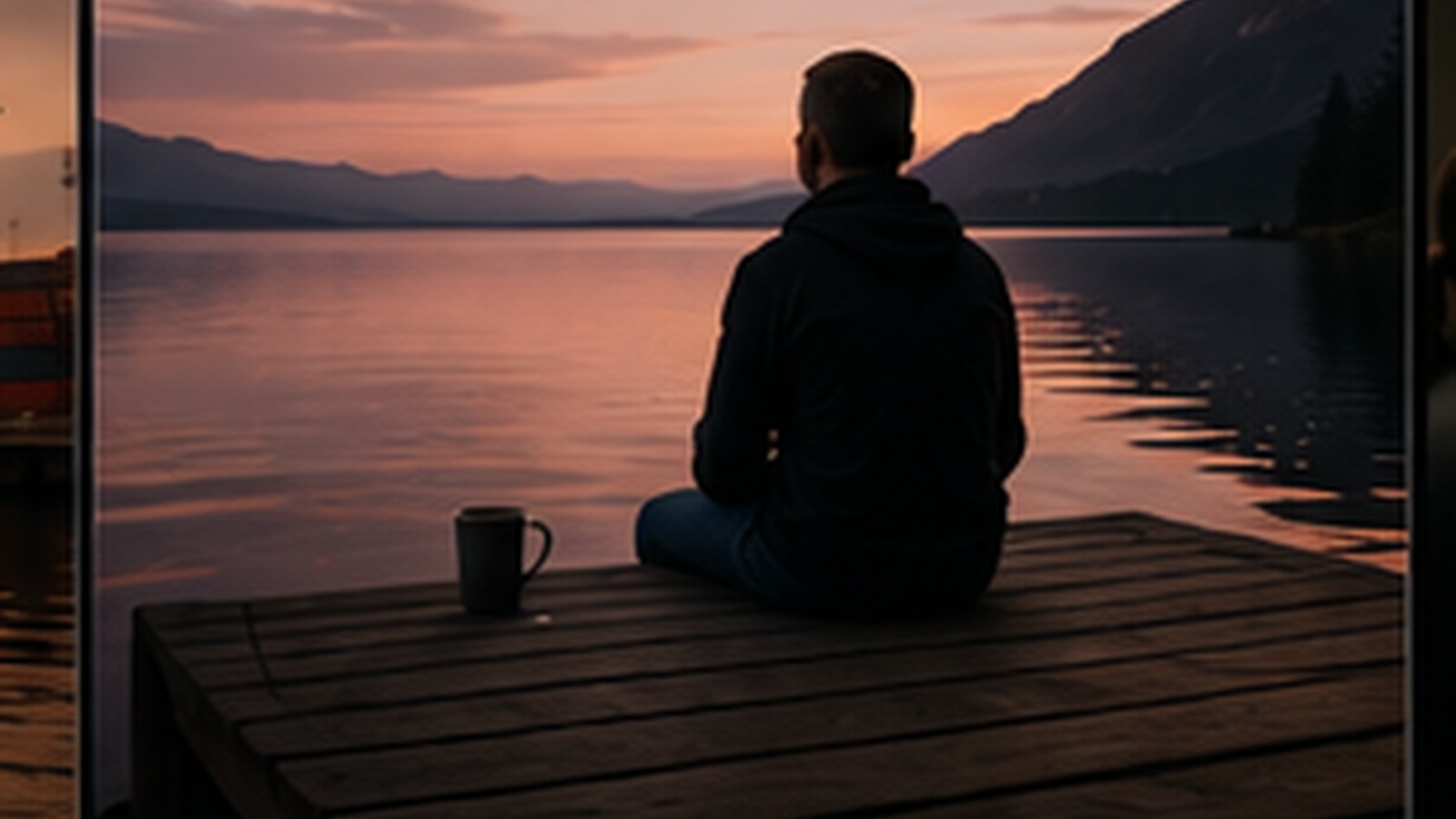
An empty ten minutes has become a problem to solve.
You're waiting for a train.
Phone.
Someone you're meeting is late.
Phone.
The kettle is boiling.
Phone.
There isn't even necessarily anything you want to see. You check your messages, glance at the news, open Instagram, close Instagram and perhaps, through some strange failure of memory, open Instagram again.
Anything to prevent the terrible possibility that nothing might happen.
We have become very good at filling the gaps
This isn't really about phones.
Phones are simply extraordinarily good at giving us something to do.
Before them there were newspapers, magazines, televisions and the back of cereal packets. Human beings have presumably always had a fairly complicated relationship with boredom.
What's changed is our ability to eliminate it.
There is now almost no gap too small to fill.
Three minutes in a queue can contain a video. A walk can contain a podcast. A train journey can contain a film. Even going to the toilet apparently requires reading material supplied by the entire internet.
We have reached the point where being alone with our own thoughts for seven minutes can feel like an administrative error.
Doing nothing means nothing
The obvious move here would be to explain why doing nothing is secretly good for you.
Perhaps it will make you more creative.
Perhaps you'll solve a difficult problem.
Perhaps your attention will improve and you'll return to work refreshed, focused and 14 per cent more productive.
But then we have done it again.
We've taken an empty piece of time and given it a job.
So let's make the proposition less useful.
Do nothing because you are doing nothing.
Sit in a chair.
Look out of a window.
Wait for someone without checking where they are every thirty seconds.
Stand at a bus stop and watch the road.
You don't have to meditate. You don't have to practise gratitude. You don't have to listen to the birds unless the birds happen to be interesting.
Nothing needs to come from it.
Leave a gap
There is something slightly luxurious about an unclaimed piece of time.
A Sunday afternoon with nowhere to be.
Ten minutes before everyone else gets home.
Half an hour sitting outside a pub waiting for a friend.
These moments used to contain whatever happened to be there.
You watched people. Your mind wandered somewhere odd. You noticed a building opposite that you'd walked past a hundred times. You became bored.
And sometimes absolutely nothing happened.
Perhaps we've become too suspicious of that last possibility.
Not everything needs to entertain us. Not everything needs to teach us something. Not everything needs to improve us.