Start with three strength movements
Three gentle movements offer a manageable first strength session, with room to build a fuller programme.
Make the first session easy to repeat
There is a peculiar amount of homework involved in deciding to get stronger. Before lifting anything, you can spend an evening comparing programmes, watching arguments about technique and wondering whether you need a different pair of shoes.
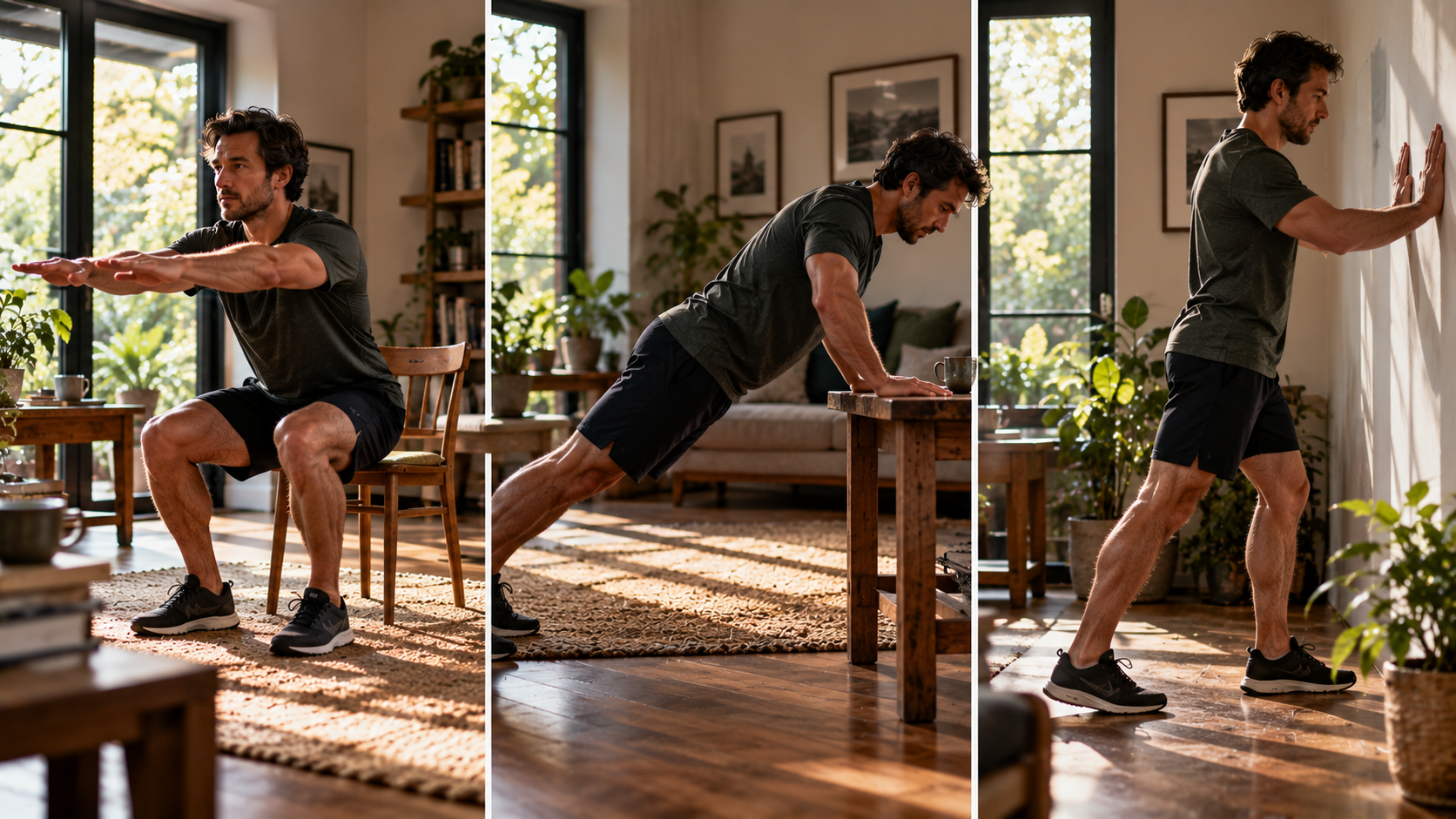
For a first encounter with strength exercise, narrow the job. Practise getting up from a chair, pressing against a wall and raising your heels. You need a stable seat, a clear patch of floor and a few unhurried minutes. The purpose is to learn movements you can repeat with control.
This is a gentle starting session for adults who can stand and move around independently. Three movements do not cover every muscle group or replace a fuller programme. If you have an injury, a condition affecting exercise or concerns about falling, ask a suitable healthcare professional how to adapt the starting point.
Learn the three movements
Use a solid chair without wheels, on a surface where it will not slide. Wear comfortable clothing and footwear that grips. Begin with a little easy movement around the room, then take each exercise separately.
- Sit to stand: sit near the front of the chair with feet flat and about hip-width apart. Lean slightly forwards, stand steadily, then lower yourself with control. Use your hands for assistance if needed; choose a higher, stable seat if the movement is too difficult.
- Wall press-up: face a wall at roughly arm’s length, hands at chest height. Bend your elbows slowly to bring your body towards it, keeping your body aligned. Press back gently. Use a smaller movement if that is more comfortable.
- Calf raise: hold a stable support, lift both heels a comfortable distance, then lower them slowly. Keep the support; this session is about the movement, rather than testing your balance.
These are drawn from the NHS strength exercise guide, which includes demonstrations and further options.
Leave something for next time
Try up to five comfortable repetitions of each movement to begin, with a rest between exercises. Fewer are fine. This is an introductory practice, not a requirement to finish a circuit. Keep breathing normally, and stop before your control deteriorates. Pain, dizziness or unusual breathlessness are reasons to stop, rather than an instruction to push harder.
When you finish, the useful question is whether you could repeat the session another day. There is no prize for making the first attempt so demanding that the chair becomes an enemy for the rest of the week.
If the movements felt manageable, choose another day after a rest day. Keep the same versions initially. You will learn more from repeating a familiar movement than from changing everything because a different video appeared in your feed.
As the session becomes easy, add a little at a time: perhaps another repetition, then eventually a more demanding version agreed with a qualified instructor. Avoid increasing everything together. A session can become harder without becoming hurried.
Let the routine grow
The eventual aim is broader strength work. That includes muscles and movements this small selection leaves out, especially pulling with the upper body. A trainer can help you build from these foundations towards a balanced programme suited to what you want to do.
For today, finish by putting the chair back. You have tried the movements, noticed which felt comfortable and given yourself a clear next session. That is enough to get started.