Start a ridiculously unnecessary collection
Choose a narrow, affordable collection and enjoy noticing what you would once have walked past.
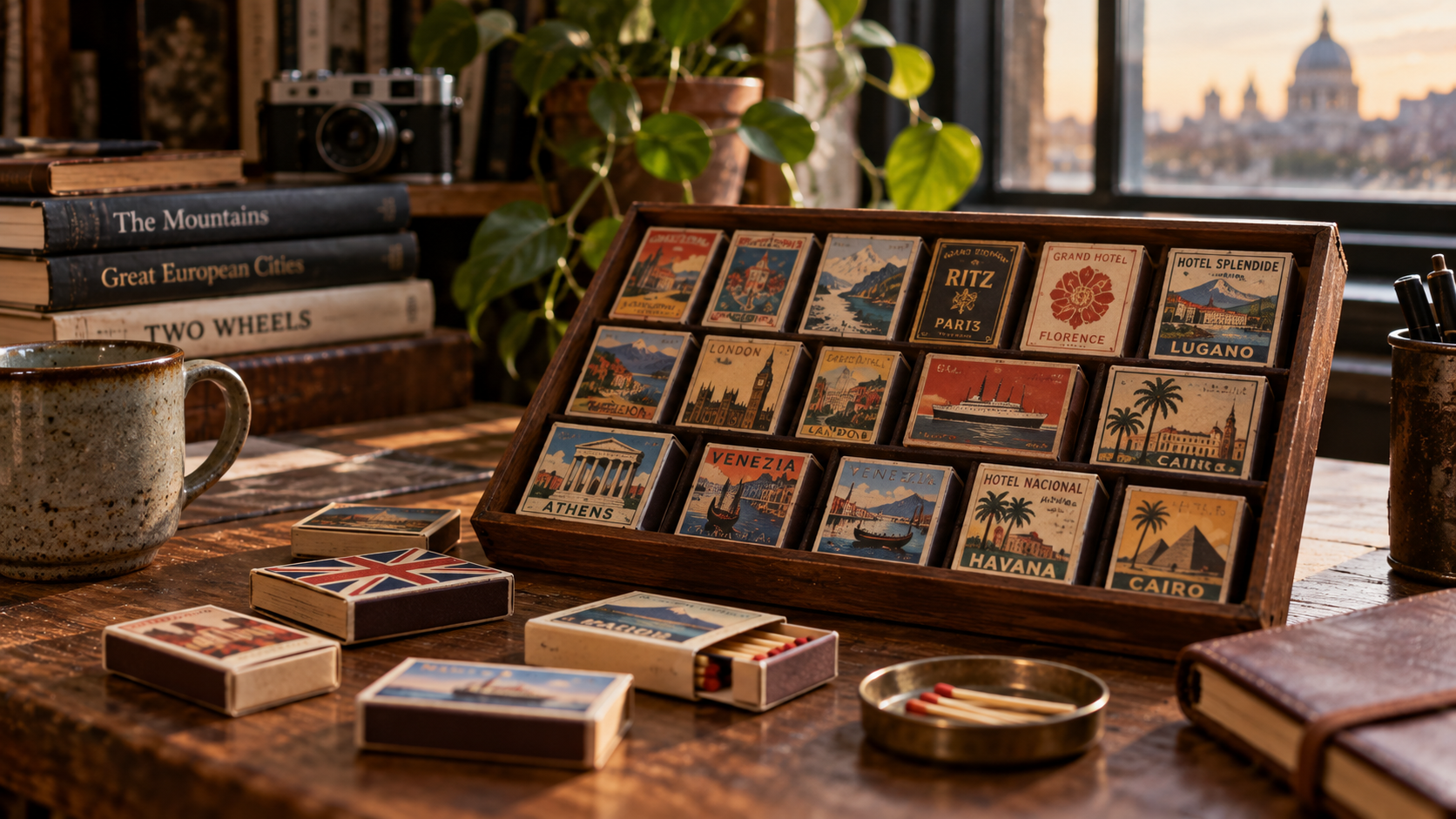
Pick something with no business case
There is a particular pleasure in owning three versions of an object nobody needs even one of. An old postcard of a pier, for example. Then another pier. Then a postcard of a pier with a remarkably unconvincing blue sky.
A collection gives your attention a small, eccentric assignment. You begin noticing things you would previously have walked past. An ordinary shop or market acquires a question: might there be one here?
Start with something modest enough to remain enjoyable. Used illustrated postcards are a good candidate because the category can be narrowed, the objects are easy to store and you can choose by what appeals to you. You are not required to discover a valuable rarity. A card can earn its place by making you smile.
Give the collection a boundary
Choose a subject before choosing a quantity. British seaside shelters. Hotel swimming pools. Castles photographed from improbable angles. The narrower idea makes each find more recognisable and gives you a reason to leave most of a dealer’s box alone.
Set a small spending limit you can comfortably afford, including postage if buying online. Choose a physical limit too: one album, one box or one section of a shelf. Boundaries keep the collection from quietly becoming a second furnishing scheme.
You can change the rule later. It is there to help you choose, not to establish an institution whose founder must obey the constitution forever.
If postcards do nothing for you, the principle travels. Pick an ordinary, lawful manufactured object that fits your space. Avoid wildlife products, archaeological finds and anything with doubtful provenance. Curiosity does not give you permission to remove something from a place where it belongs.
Make the first find slowly
Try a second-hand shop, book fair or established market stall. Ask before handling fragile stock and check the price before making a pile. Online listings offer more choice, but they can remove the pleasure of finding something unexpectedly. Decide which part of collecting you actually enjoy.
For a postcard, inspect the corners, surface and back. A crease may not matter to you; a smell of damp or damage that will worsen might. Buy the object you can see, rather than the seller’s suggestion that it must be rare.
If a card has been written on, treat the message as somebody’s correspondence. You can be interested in it without publishing a stranger’s address or turning a private note into an online joke. A purchased object can still contain a person’s history.
One card is a sufficient first purchase. You do not need to buy a job lot to prove the hobby has begun.
Give the objects a home
Use a suitable album or archival sleeves and keep paper away from damp and strong sunlight. Avoid gluing the cards into place. A simple note of where you found each one and what drew you to it can be more interesting later than a complicated catalogue number.
Arrange them occasionally. Two similar views may reveal a changed building or simply a photographer’s different idea of where to stand. You do not have to research every detail, though a question may send you towards a local history book you would otherwise never have opened.
The collection can remain incomplete. In fact, an attainable complete set may be less fun than a category with room for surprises. You can also stop, give some away or decide that the first few were enough.
Its value is the attention and enjoyment it gives you now. Three odd little postcards, a place to keep them and something to look for on a free afternoon: that is already a collection doing its job.