Spend a day in a ruined castle
At Kenilworth, a few surviving rooms reveal how different owners used the castle to defend and impress.
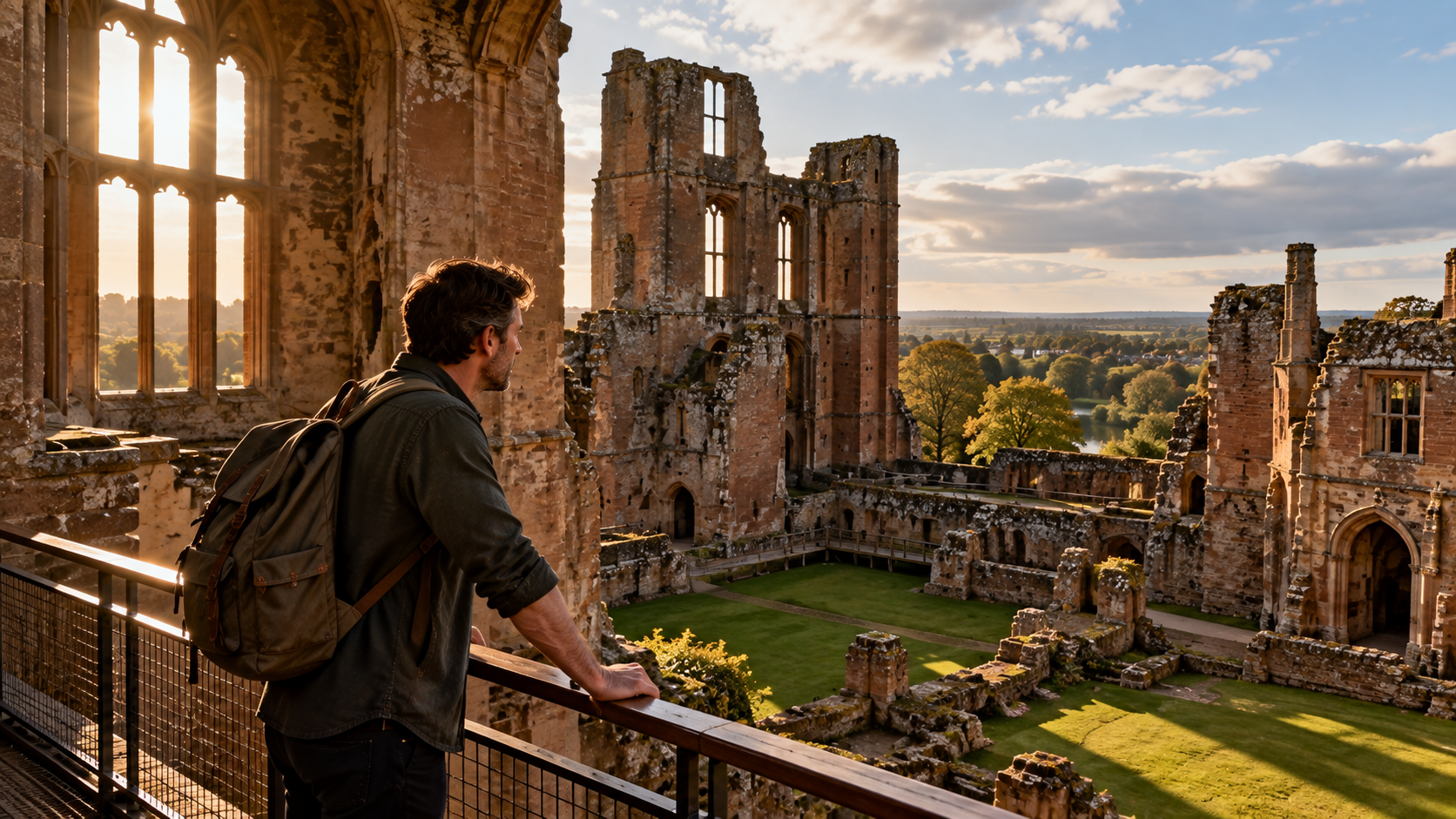
Pick a place with something left to read
A ruined castle asks a little more of you than a furnished house. The roof has gone. The room may have lost its floor. A doorway can open into air, which is an intriguing architectural decision until you remember that a staircase used to be there.
At Kenilworth in Warwickshire, the surviving buildings make a good place to practise looking. A Norman keep, John of Gaunt’s great hall and Robert Dudley’s Elizabethan additions occupy the same site. They were built for different purposes and expectations. Once you begin separating them, “an old castle” becomes several different ambitions in stone.
Give the visit most of a day, including a break, rather than treating it as a photograph collected between other stops. Start with English Heritage’s visitor information for the date you intend to go. Book as appropriate and check the access guide: ruins can involve uneven ground and stairs, and the higher views are not the only way to enjoy the place.
Find the shape before the story
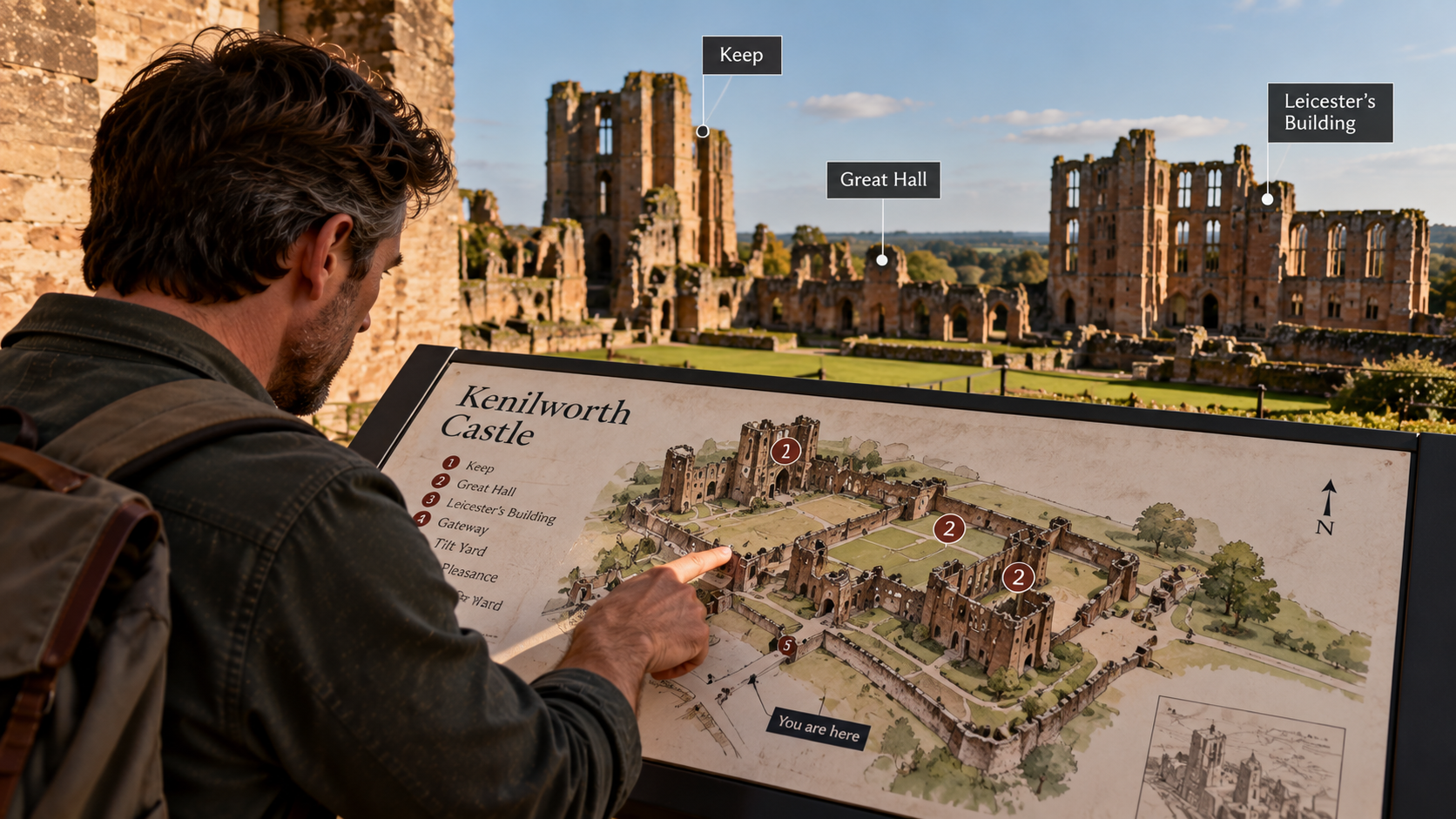
At the entrance, get a plan or use the site interpretation. Locate the keep, the great hall and Leicester’s Building before trying to remember anybody’s family tree. You are giving the names somewhere to live.
Begin with the keep’s heavy mass. Then compare it with the great hall’s surviving windows and openings. The change in feeling is the point: a castle could project wealth and hospitality as well as defensive strength. Look at what a visitor would have approached, entered and looked up towards.
English Heritage identifies the great hall with John of Gaunt’s late medieval rebuilding. Its guide to the surviving features also explains Leicester’s Building, created by Robert Dudley for Elizabeth I’s visits. The contrast lets you see successive owners changing what the place was for.
You do not have to reconstruct every missing wall. Choose one room. Find its windows, identify the entrance with the help of the plan and imagine how people reached it. Check your guess against the interpretation. The correction is often as interesting as the guess.
Notice the work of impressing somebody
Elizabeth visited Kenilworth in 1575. Knowing that gives the luxurious apartments a particular audience. These were spaces intended to make an impression on a real person, rather than features added for a future heritage trail.
Look for the relationship between privacy and display. How far would a guest travel through the complex? Which spaces were public, and which were reserved? Let the site’s interpretation guide the answers rather than assuming every grand room served the same purpose.
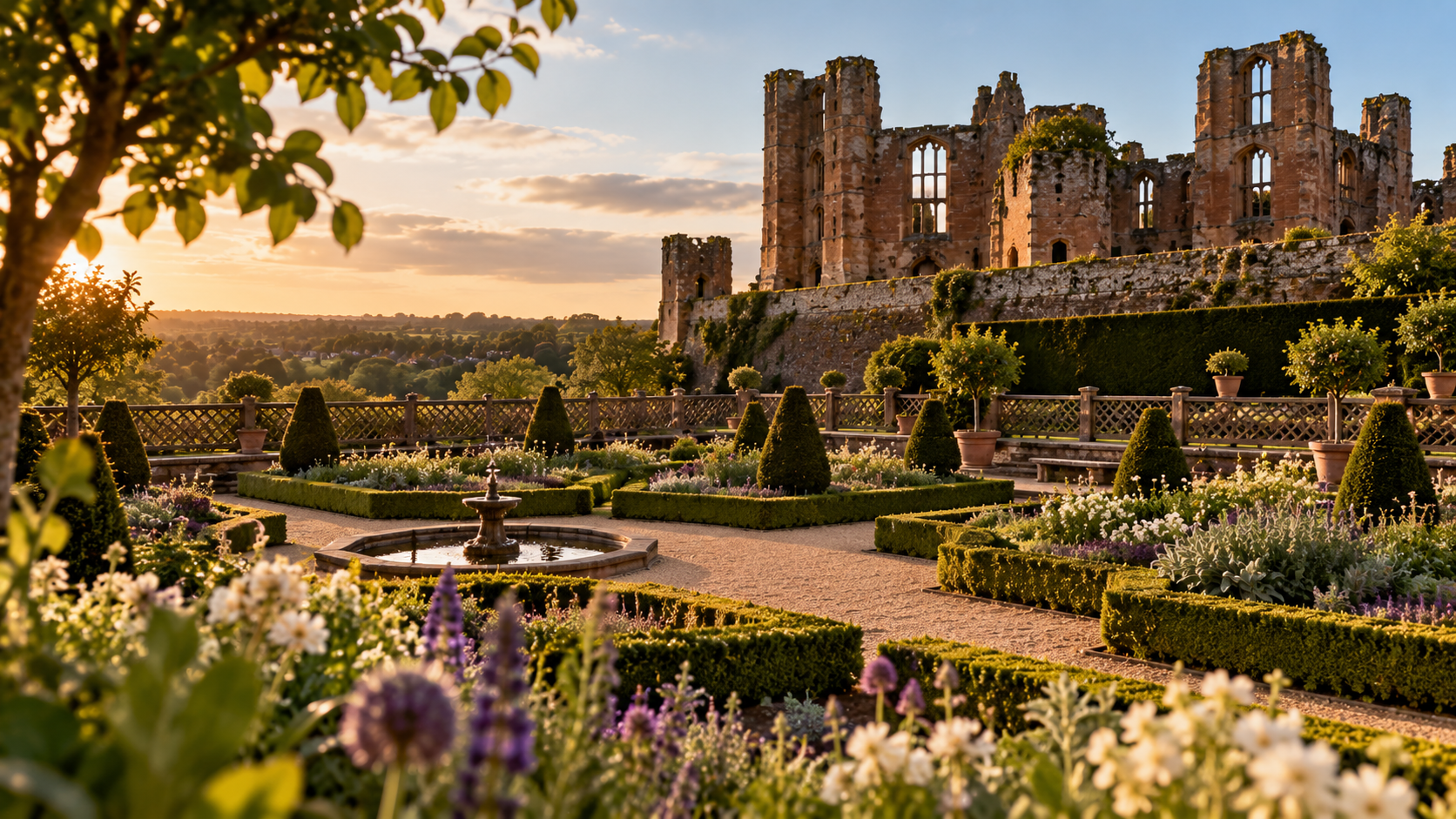
The recreated Elizabethan garden offers a different kind of evidence. Enjoy it as a modern reconstruction informed by history, not as planting that has remained untouched since the queen arrived. Seeing a place brought back into shape can help, provided the distinction stays clear.
Leave time to look from outside
Take a break at the site’s tearoom if it is open, or arrange lunch to suit your budget. Then, if the paths and your mobility allow, follow the permitted route outside the walls. The buildings become a group again, seen against their setting.
Stay behind barriers and leave loose stone where it lies. Ruins are still structures, and their apparent incompleteness is not an invitation to climb wherever a foothold appears.
Before leaving, return to the feature that caught your attention first. It may look different now that you know where a floor sat or who wanted those windows. A few missing details have acquired a shape. That is the particular pleasure of a ruin: part of the visit happens in front of you, and part happens as you piece it together.