Nuln Oil: the best thing in your painting locker
Nuln Oil has been called “liquid talent” by miniature painters for years. The joke works because this thin black shade really can do an absurd amount of work, turning sculpted detail into convincing shadow with one carefully applied coat.
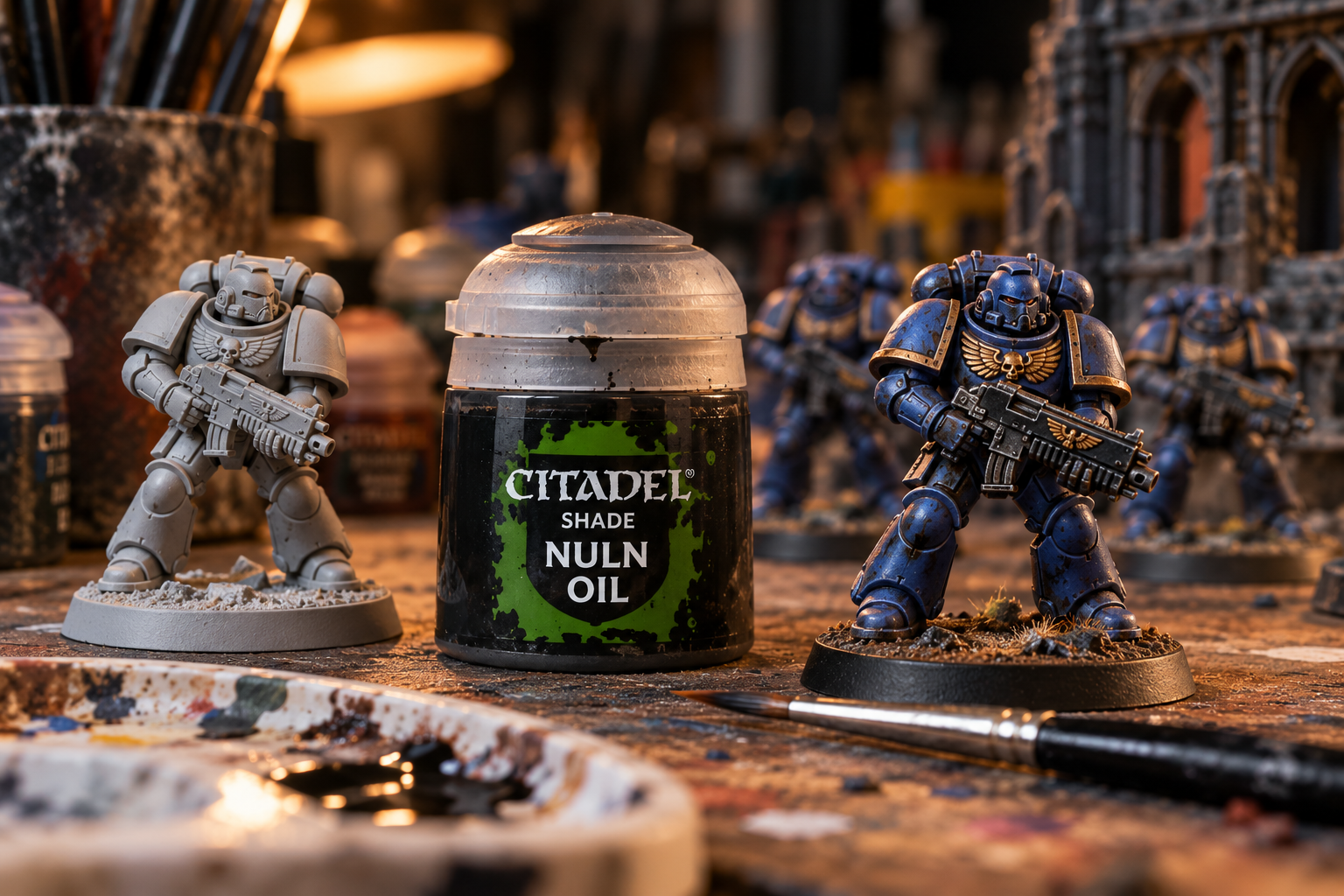
Opening
There is a moment in miniature painting when a small plastic man stops looking like a small plastic man with paint on him.
For a lot of painters, that moment arrives shortly after opening a pot of Nuln Oil.
The name sounds like something leaking from the sump of a Soviet submarine. The paint itself is not much more glamorous: a thin, dark Citadel Shade made by Games Workshop. Brush it over a base-coated miniature, wait for it to dry, and suddenly rivets stand out, armour plates separate, chainmail acquires depth and a face begins to have something resembling cheekbones.
This is why miniature painters have spent years calling the stuff “liquid talent”. Not because it can actually paint for you, sadly, but because few things in the hobby offer such an indecent return on so little effort.
The thing
Nuln Oil is essentially a black shade paint. Citadel introduced it with the big 2012 overhaul of its paint range, when the old Washes gave way to a new family called Shades. It inherited the job many painters had previously given to Badab Black: getting darkness into the places darkness ought to be.
The formula has not stood still. Games Workshop reformulated its Shade range in 2022, including Nuln Oil, with the newer paints intended to gather more in recesses and tint raised surfaces less heavily. The current pot is 18ml. None of this sounds especially legendary.
Then you put it over silver.
Fresh metallic paint can make a suit of armour look as though it has been cut from a Christmas decoration. Add Nuln Oil and the black shade runs around rivets, into joints, beneath overlapping plates and between links of chainmail. The silver remains visible, but the sculpt suddenly has structure. A gun acquires panel lines. An engine gets grime in the seams. Steel starts looking less like silver paint and more like metal.
It works on plenty besides metal. In folds of cloth it deepens creases. Around straps, buckles and pouches it separates one object from the next. On machinery it picks out vents, bolts and recesses that were present in the sculpt all along but were difficult to read once everything had been covered in a flat base colour.
Black is not the right shade for everything. Brown, sepia, green, blue and other washes exist because shadows also carry colour. But Nuln Oil is wonderfully good at the things miniature armies tend to contain in industrial quantities: steel, weapons, armour, machines and ominous bits of gothic engineering.
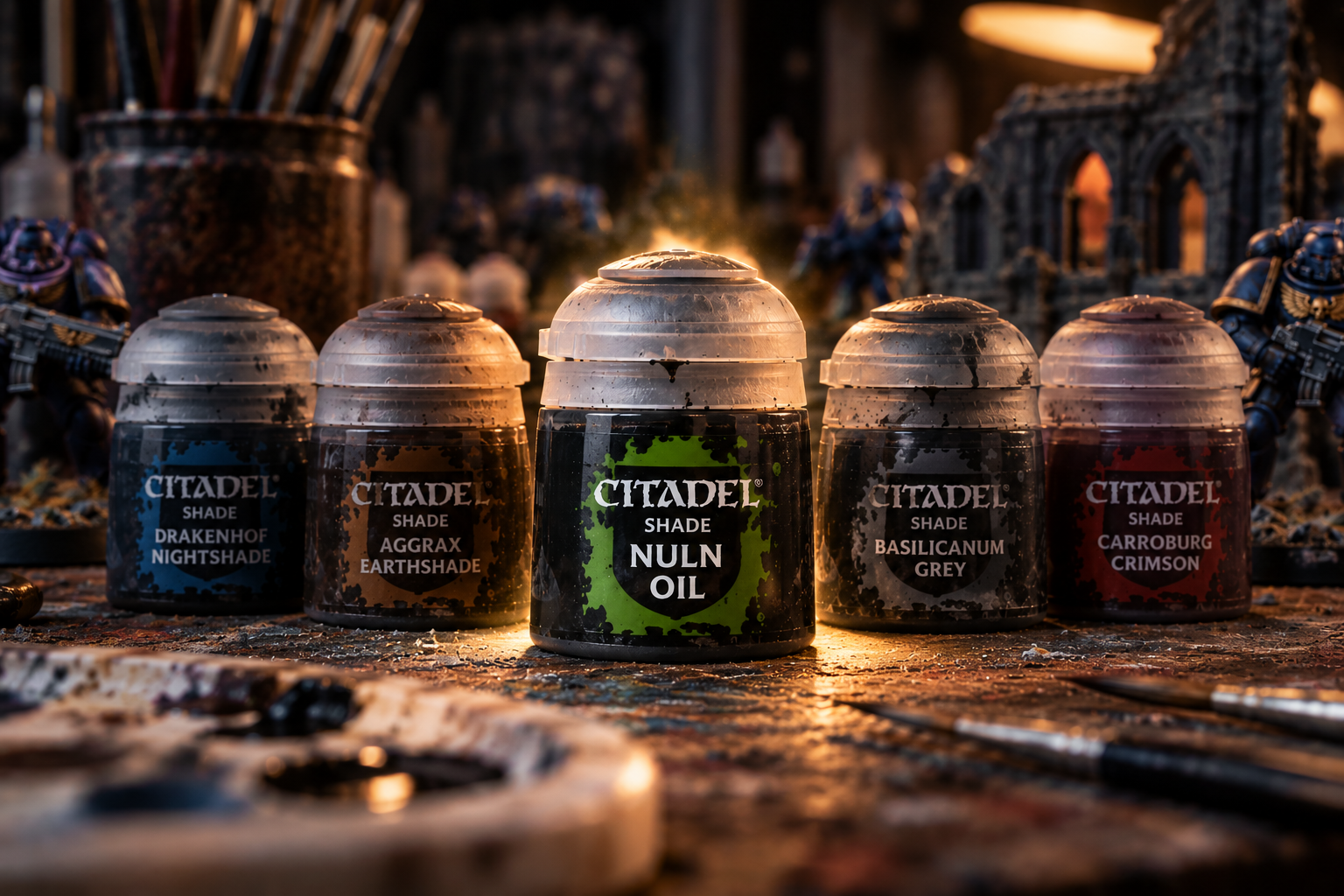
How it is made
The clever part is less the colour than the behaviour of the paint.
A normal opaque acrylic is meant to stay roughly where your brush puts it and cover what sits underneath. A shade is much thinner and more translucent. Across the miniature it flows away from high points and collects more heavily in grooves, corners and recessed detail. Where the layer is thin, the base colour still dominates. Where more shade gathers, the colour becomes darker.
That difference matters because a miniature is tiny. Real light does create real shadows on a 28mm or 32mm figure, but not with the strength and clarity our eyes expect when reading a full-sized object. Miniature painting cheats. Painters exaggerate light and dark so a belt reads as separate from a coat, a knee plate sits forward from a greave and each link in a patch of chainmail can be seen from across the table.
Nuln Oil automates a useful part of that cheating. The sculptor has already put the recesses in the model. The thin shade finds them and makes them darker.
That is the little piece of craft hiding inside the joke about liquid talent. You are not magically adding detail. You are increasing the contrast around detail that is already there.
The detail worth noticing
For a beginner, this can feel faintly ridiculous.
You spend ages trying to keep a base coat neat. The model looks clean but strangely flat. Then a fairly indiscriminate-looking coat of dark liquid goes over it and, for several worrying minutes, your miniature appears to have been recovered from an oil spill.
Leave it alone.
As the shade settles and dries, the raised areas become readable again while the recesses stay dark. The change is particularly satisfying on something like chainmail: one silver mass becomes dozens of individually legible rings without you having painted dozens of individual shadows.
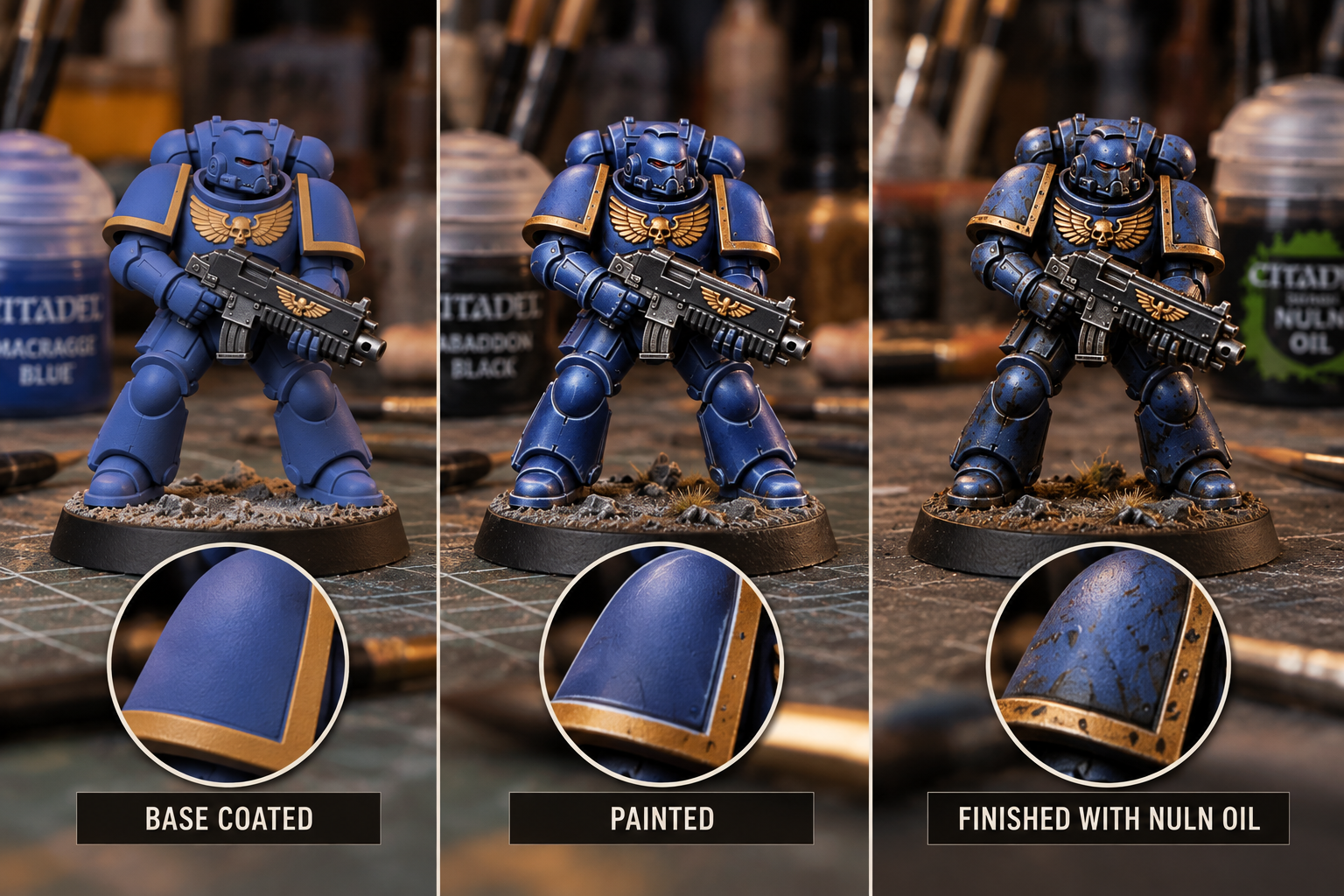
There is a limit, of course. Flood a flat panel and the shade can pool where you do not want it. Let a large droplet dry on a cloak and you may get a dark tide mark. Sloshing Nuln Oil over every colour on every model is a phase many painters go through, often enthusiastically. Eventually you learn that control is better than quantity.
The simple version is enough to explain the appeal. Put down a decent base colour. Let a sensible amount of shade collect in the recesses. Once it is dry, bring some of the original colour back onto the raised areas, or add a lighter highlight to the edges. Three modest stages can create far more depth than the amount of skill involved would seem to justify.
That is probably why Nuln Oil has become one of those bits of hobby kit people talk about with genuine affection. There are cleverer techniques. There are painters who can place every shadow by hand and make a 32mm face look alive. There are also evenings when you have twenty armoured idiots staring at you from the painting desk and would quite like the paint to do some of the work.
Nuln Oil does.