Make getting out of a chair an exercise
A controlled sit-to-stand is one familiar movement worth understanding, with suitable support and room to practise.
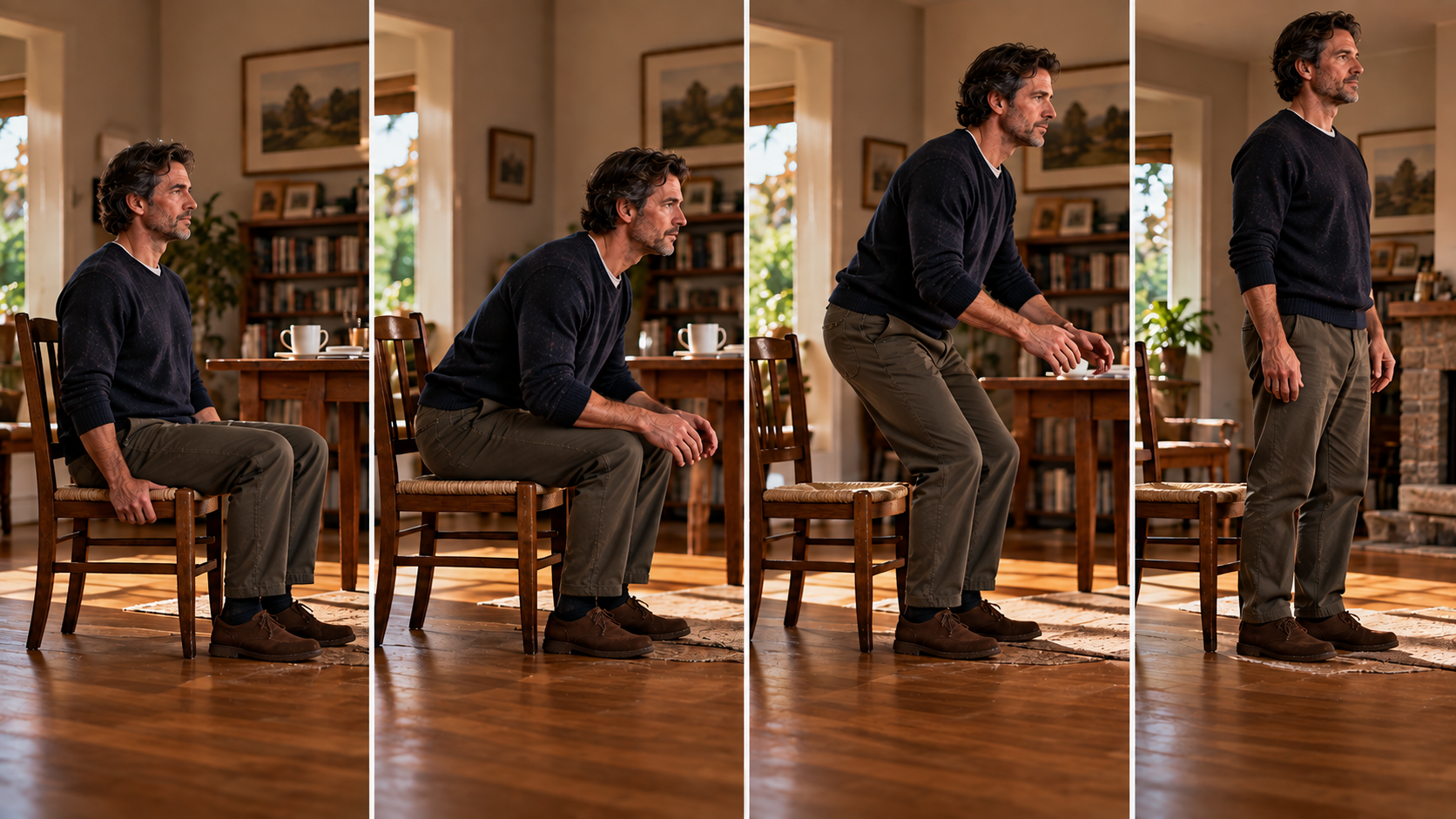
You already know the movement
Getting out of a chair rarely feels like an exercise. You stand up because the kettle has boiled, the doorbell has gone or somebody needs the seat.
Slow the movement down and pay attention to it, though, and it becomes something you can practise deliberately. The NHS includes sit-to-stand in its home strength exercises. It is a familiar task with a useful place in everyday life, rather than a new movement you have to decipher from a gym machine.
That doesn't make it the best exercise for everyone. It makes it one option worth understanding.
Start with the chair
Use a solid, stable chair which has no wheels and won't slide. You should be able to sit with your feet flat on the floor. Clear the space around it and wear footwear that gives you a secure footing.
The NHS version uses a chair without arms. If you already need armrests, another person's assistance or a walking aid to get up safely, don't discard that support to follow a general article. A physiotherapist or other qualified professional can help choose an appropriate version.
If you have a condition, recent operation, pain or balance problem affecting the movement, get advice before turning it into repeated exercise.
Make one repetition deliberate
For the standard NHS version, sit towards the front of the chair with your feet about hip-width apart. Lean slightly forwards, then use your legs to rise slowly. Look ahead as you come upright.
Return to sitting with control rather than dropping into the seat. Use your hands to guide yourself if needed. Let the chair take your weight before starting again.
The useful detail is the control on the way down. It is easy to think the repetition ends when you're standing, then collapse back into place. Treat sitting down as part of the movement too. NHS strength exercises.
Find the amount that suits you
Begin with an amount you can do comfortably and safely. You don't need to chase a score or match somebody else's set. Pause between efforts and stop before the movement becomes rushed or unstable.
Pain, dizziness or feeling unwell are reasons to stop, not evidence that the exercise is working. If symptoms are new or recurring, seek advice. A new difficulty getting out of a chair also deserves attention rather than simply more repetitions.
The exercise might be too demanding for you right now. It might be so easy that it isn't a useful strength challenge. Both are possible. You can ask for help adapting it without treating either answer as a verdict on your age or character.
Give it an ordinary place
If it suits you, attach the practice to a moment you remember: before a walk, perhaps, or when you finish a particular part of the day. Leave enough space and attention to do it properly. Balancing a hot drink while standing up repeatedly is an unnecessary variation.
Notice whether you can keep the same controlled movement across the repetitions you choose. That is a more helpful starting point than immediately adding weight, lowering the chair or trying to beat a timer.
Then carry on with your day. A familiar action can be worth practising without needing to become an event.