Listen to one album all the way through
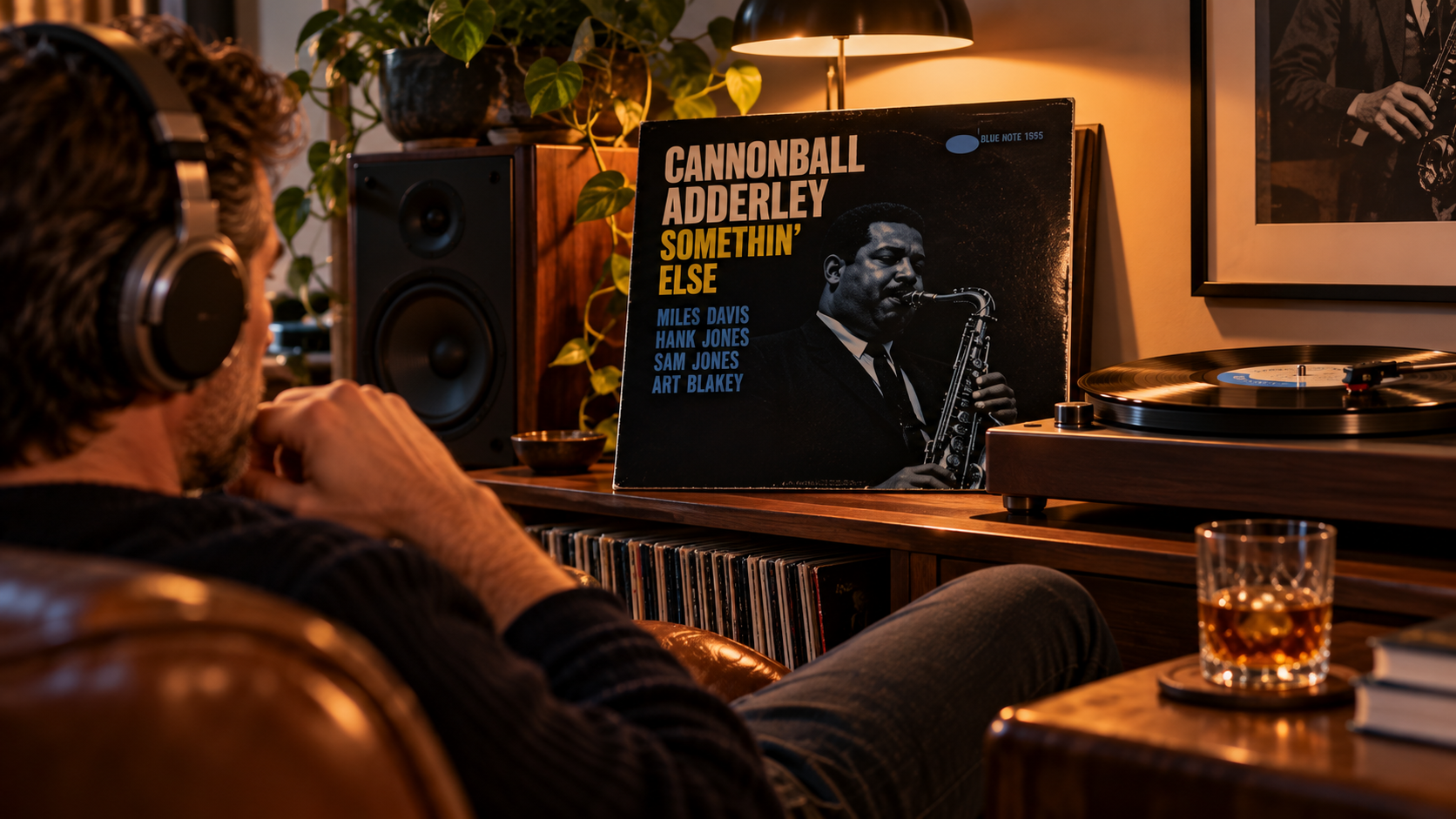
Hear the original sequence of Cannonball Adderley’s Somethin’ Else and follow the musicians through a complete record.
Choose a record with room inside it
An album can be a good way to spend an hour without turning the hour into a project. You press play, hear what follows and let someone else decide the sequence for a while.
Try Somethin’ Else, the 1958 Blue Note album led by alto saxophonist Cannonball Adderley. Miles Davis plays trumpet, with Hank Jones on piano, Sam Jones on bass and Art Blakey on drums. You do not need to know their careers before beginning. Those names can become people whose sounds you recognise as the record unfolds.
For this occasion, choose the original five-track sequence. The five-track digital edition lasts about 39 minutes. Some reissues include a sixth, bonus track, taking the running time to around 44 minutes. Neither version requires an evening’s commitment, but knowing which one you have avoids an unexpected extra ending.
Set it up and leave it alone
Use whatever you already own: a speaker, comfortable headphones or a record player. Pick a moderate volume that lets you hear the quieter parts without making the louder ones uncomfortable. Expensive equipment is not the entry fee.
Turn shuffle off. If your service automatically continues into other music, switch that off too, so the record can actually end. Then put the screen somewhere you do not have to keep looking at it.
The original order runs through Autumn Leaves, Love for Sale, Somethin’ Else, One for Daddy-O and Dancing in the Dark. You do not need to memorise it. It is simply the route you are taking.
If sitting still feels unnatural, do something undemanding with your hands. Avoid a task so absorbing that the music disappears behind it. There is room between ceremonial listening in an armchair and using an album to disguise the sound of email.
Follow one instrument for a while
Autumn Leaves gives you a long opening space to settle into. Try distinguishing the trumpet from the alto saxophone, then follow what happens behind them. The rhythm section is participating throughout, rather than waiting politely for the main instruments to finish.
When the title track arrives, listen for the exchanges between the horns. Blue Note’s account of the recording draws attention to its call and response and the contributions of the other players. You can hear that interaction without needing to name the chords.
Now move your attention elsewhere. What changes if you listen mainly to the drums for a minute? Does the piano become more noticeable when the horns leave space? These are invitations to hear another part of the music, not questions with answers at the back.
The sequence matters because each track changes the company of the next. A familiar song played alone has a different setting from one reached after half an hour with these musicians. By the final track, the instruments may feel less anonymous than they did at the beginning.
Let the ending stay an ending
When the album finishes, leave a little silence. You do not need to rate it immediately or decide whether you are now a jazz person.
Perhaps one tune stayed with you. Perhaps the bass was the thing you kept returning to. Perhaps you admired the playing and would rather choose something noisier next time. Listening closely does not create an obligation to enjoy the result.
The worthwhile part is having given a complete record a fair hearing. If you want another listen, you know where to start. If you do not, there is an enormous amount of music left, and another evening in which to try it.