How the Tenet plane crash was made
The real 747 in Tenet was part of a carefully built effect, combining practical destruction with digital clean-up.
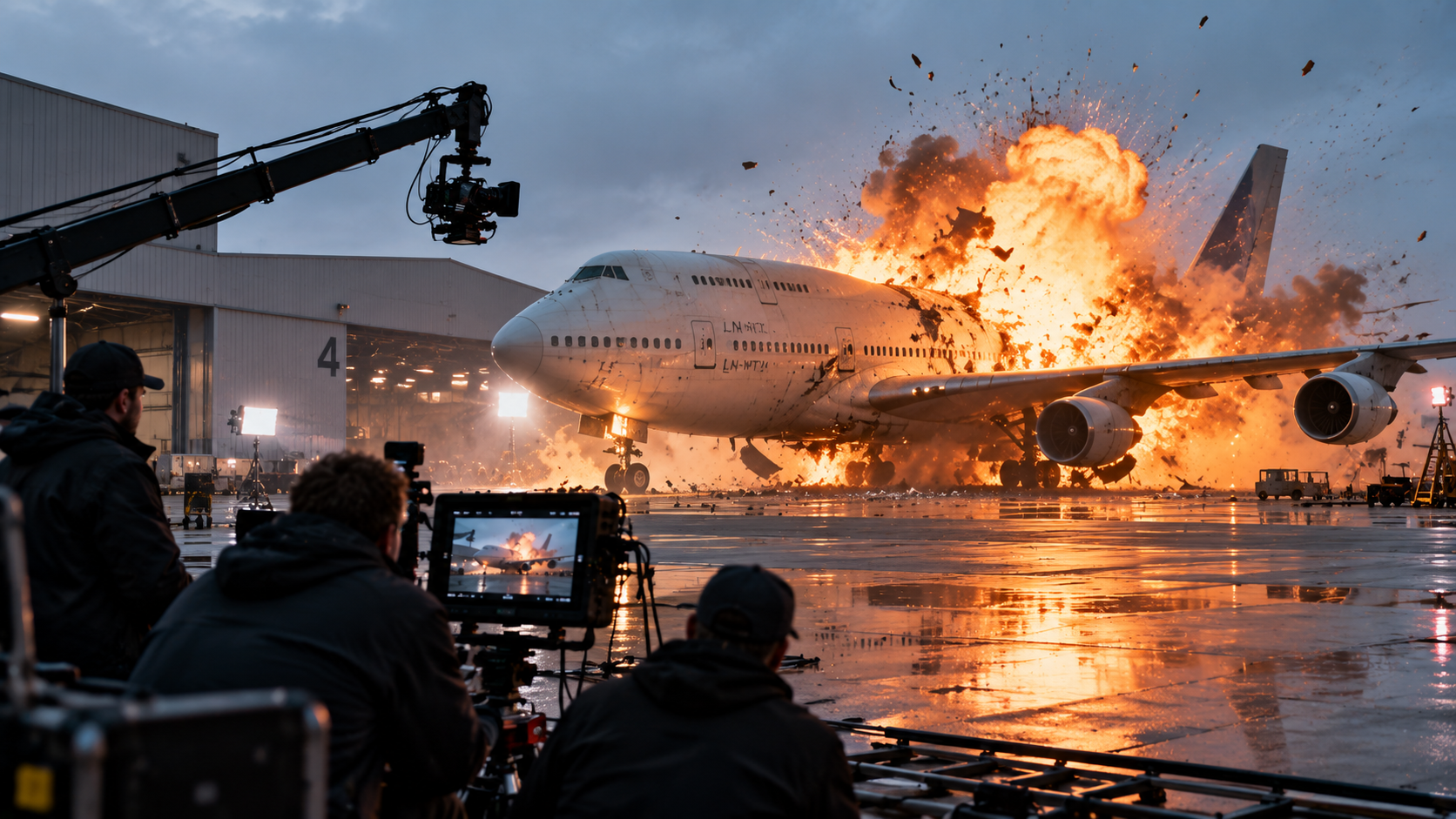
Yes it was a real plane
The aircraft which crashes into the airport building in Tenet was a real Boeing 747. That fact has travelled rather well on the internet, usually in a sentence which makes it sound as though Christopher Nolan went shopping for a jumbo jet and immediately drove it into something.
The production did buy a real aircraft. The more interesting story is what happened between acquiring it and getting a usable shot.
In a Total Film interview, Nolan explained that the original plan involved miniatures, constructed elements and visual effects. Location scouting in Victorville, California, brought the team into contact with a large collection of old aircraft. They ran the numbers and concluded that a full-size plane would be more efficient for this particular sequence. Nolan's production account.
That's the director's account of the decision, not a published invoice proving a universal rule that real crashes cost less than CGI. The circumstances of one film don't establish the economics of another.
The building was part of the effect
A real plane doesn't make a shot unplanned. The building it strikes is part of the construction too.
Visual-effects supervisor Andrew Jackson described the sequence in an interview with befores & afters. The 747 hit a purpose-built structure; the flames, collapsing elements and jet bridge were practical effects captured on camera. Digital work included cable removal and clean-up. Jackson on the sequence.
That combination is worth keeping intact when telling the story. “Real plane” doesn't mean “no visual effects”. An image can have a substantial physical event at its centre and still use digital work to remove the machinery that made the event possible.
The audience needs to see an aircraft crashing, not the production's means of controlling and photographing it. Concealing those means is part of the craft.
The people behind the object
Nolan specifically credited special-effects supervisor Scott Fisher and production designer Nathan Crowley with working out how to achieve the sequence in camera. The famous object attracts the headline, but the work crosses disciplines: the structure has to behave as intended, the physical effect has to be controlled and the cameras have to turn it into a coherent screen event.
Those are connected problems. A collapse which looks impressive from one position may conceal the very thing the audience needs to understand from another. A huge object moving through a frame can provide scale, but scale alone isn't a sequence. The shot must make its direction and consequence readable.
This is where the production story becomes more interesting than the purchase. The question is how to arrange real things so the camera tells the intended story.
Watch the edges
On another viewing, notice the relationship between the aircraft and the building. Look at where the structure gives way, where debris travels and how the plane occupies space beside people and vehicles.
You don't need to identify every altered pixel. The pleasure is in seeing an elaborate piece of coordinated work pass as one violent event.
The plane is the largest object in the scene, but the joins are what make it convincing: contact, breakage, fire, movement and the shot which holds them together. Once you start looking there, the headline about Nolan buying a 747 begins to feel like the least difficult part of the job.