How do you miss a gorilla standing in front of you?
The invisible gorilla experiment showed that looking directly at something and noticing it are not the same event.
Opening
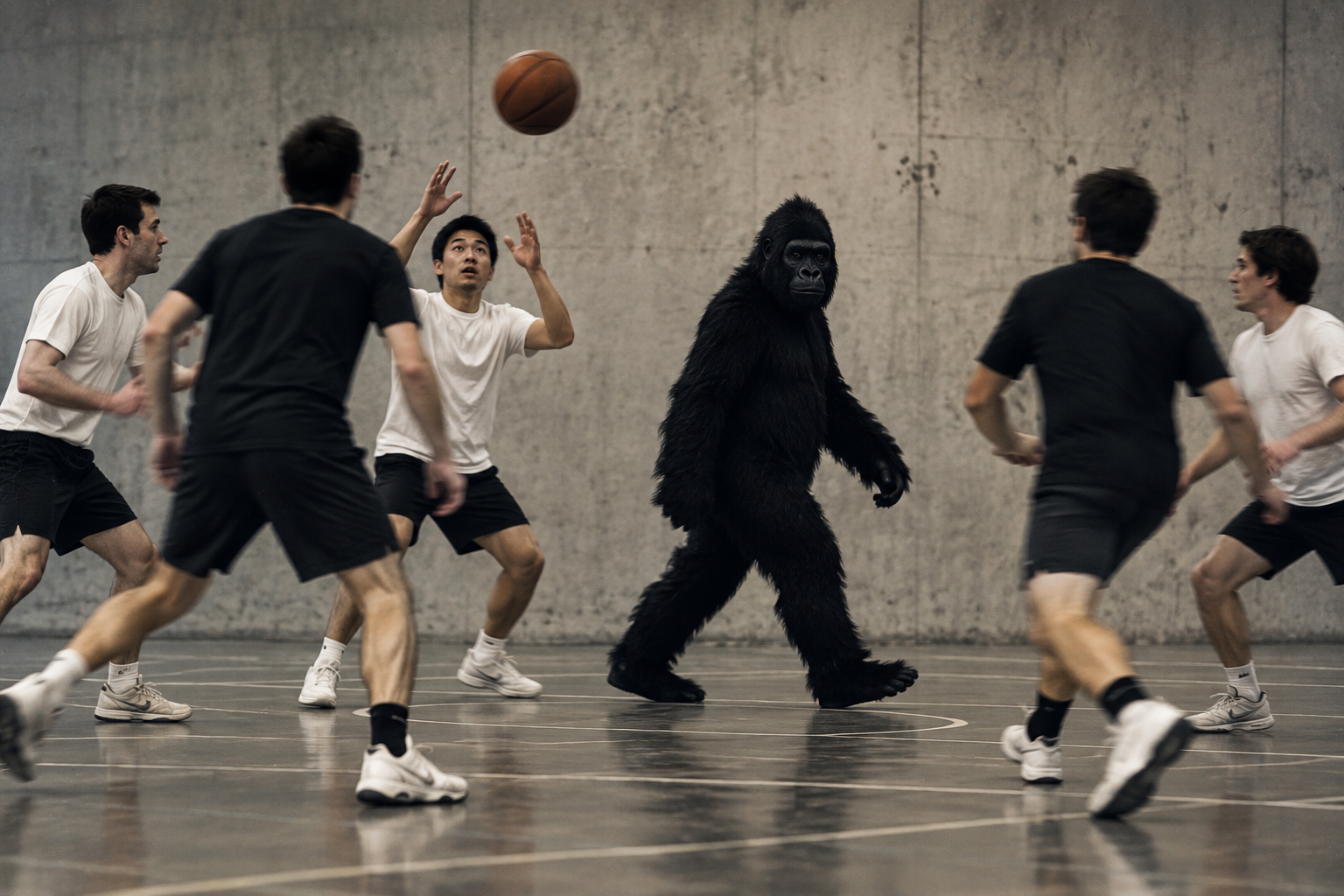
Six people are passing basketballs.
Three wear white shirts. Three wear black.
Your job is simple: watch the players in white and count their passes.
Keep your eyes on the ball.
Halfway through the video, a person in a gorilla suit walks into the middle of the game, turns towards the camera, beats their chest and walks off.
A surprising number of people never see the gorilla.
The idea
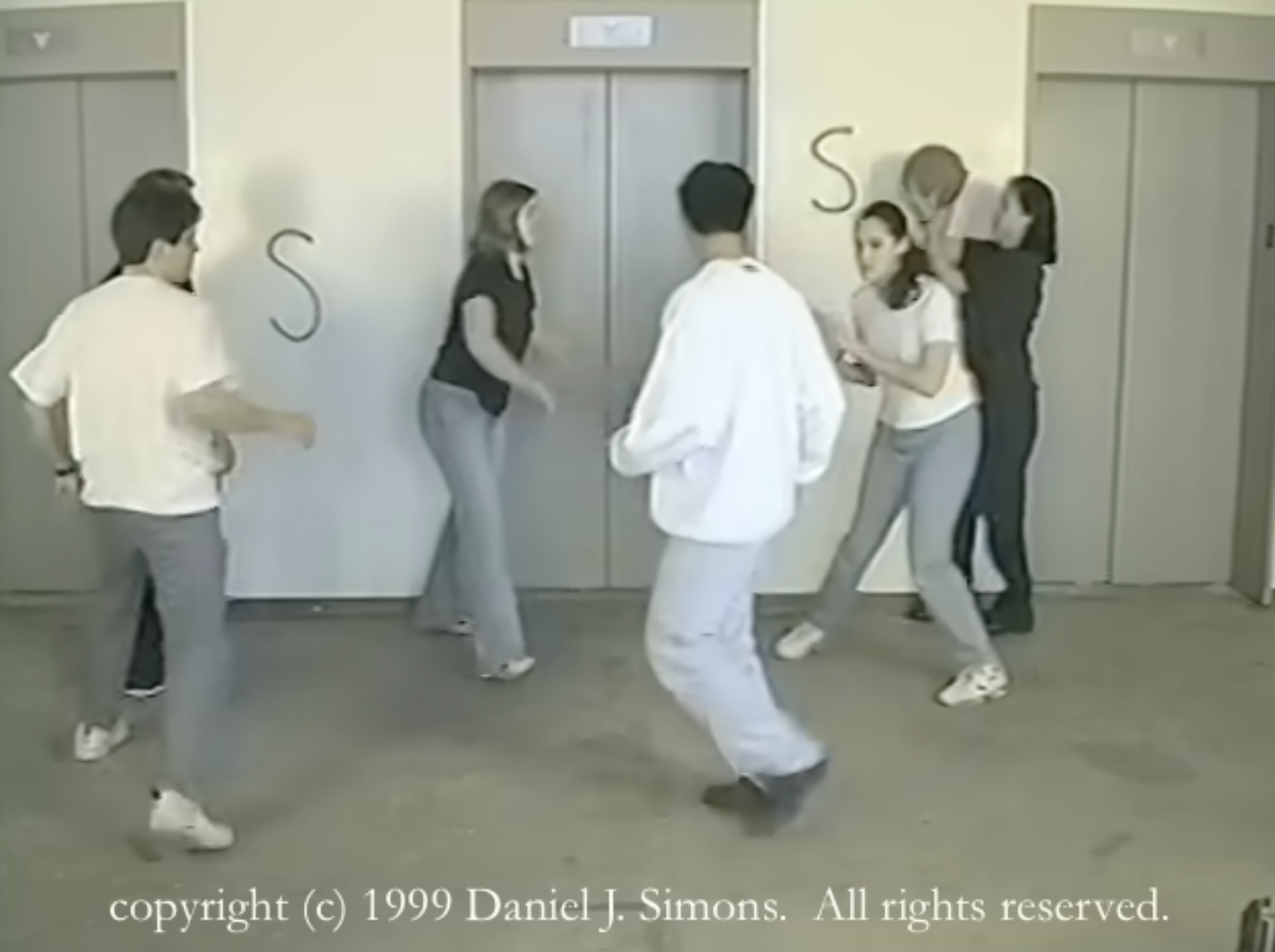
Daniel Simons and Christopher Chabris published the experiment in 1999, building on earlier work on selective attention.
Participants watched a short film of people moving around and passing basketballs. They were given a counting task that forced them to concentrate on one team.
Then an unexpected event crossed the scene.
In one version, it was the gorilla.
Depending on the experimental condition, many participants failed to report seeing it at all. In the well-known gorilla display, fewer than half noticed the unexpected visitor.
This was not a subliminal flash in the corner of the screen.
The gorilla walked through the players.
It stayed visible for several seconds.
It stopped in the middle.
It faced the camera.
Once you know it is there, missing it seems impossible.
What changes when you look at it this way
The phenomenon is called inattentional blindness.
Our visual experience feels broad and complete. Open your eyes and the whole room seems to arrive at once.
But attention is selective. Give the brain a demanding task and something conspicuous can pass through the visual field without making it into conscious awareness.
There is an important distinction here.
The experiment does not show that our eyes failed to receive light from the gorilla. It shows that seeing in the everyday sense involves more than having an image land on the retina.
Attention decides a lot about what gets through.
That creates a slightly unnerving thought.
We often treat observation as if it were a recording. I was there. I looked. I would have noticed.
The gorilla suggests a less comfortable possibility.
You can look straight at something.
And still not see it.