Before another supplement, look at lunch
Give tomorrow's lunch some attention before buying another tub, while leaving room for supplements that serve a real need.
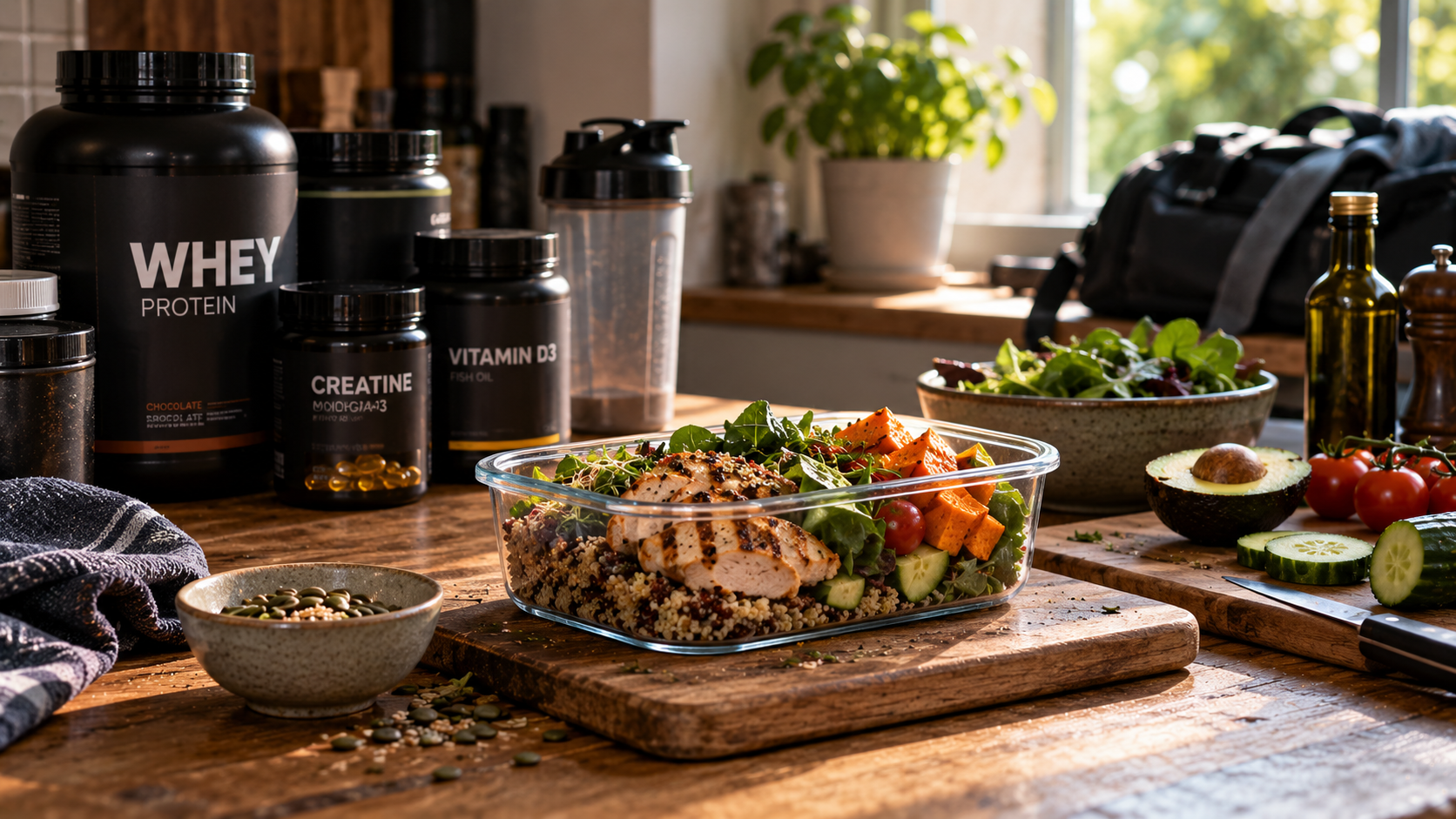
The purchase is the easy part
Imagine a cupboard with protein powder, a multivitamin, something green and expensive, and a tub whose label suggests it was designed for a lunar mission. Lunch, meanwhile, is whatever can be eaten between meetings.
It's easy to see the attraction. A supplement arrives with a name, a purpose and instructions. The ordinary business of feeding yourself has to happen again tomorrow, often when you're busy and hungry.
Before buying the next tub, it may be worth looking at that ordinary business. What do you actually eat on a normal working day?
Look at the meal you have
This doesn't require a food diary designed like an aircraft maintenance log. Think about the last few lunches. Was there enough to make a meal? Did you have some fruit or vegetables, a source of protein and something starchy? Were you regularly skipping food and then grabbing whatever was available later?
The NHS Eatwell Guide describes a balanced pattern across a day or week, rather than demanding that every plate satisfy an exact formula. It includes fruit and vegetables, starchy foods, protein foods and dairy or alternatives, alongside other guidance. The Eatwell Guide.
For lunch, a practical version might be a baked potato with beans and some vegetables, or a sandwich with a filling you enjoy plus fruit. Leftovers can work. So can something bought ready-made. There is no requirement to make nutritional reliability depend on becoming a keen cook.
The useful change may be buying enough ordinary food for the week and making it easy to reach when you need it.
Don't make food another performance
A lunch assembled from accessible ingredients doesn't become inferior because it lacks an interesting name. Frozen vegetables, tinned beans and familiar staples can make the practical part easier.
Cost, storage, breaks at work, sensory preferences and medical needs all affect what is possible. “Just eat better” is poor advice when it ignores those constraints. Pick a change that fits the day you have.
If you like cooking, enjoy it. If you don't, repeat a few meals you like. There is plenty of room between living on whatever appears and treating every lunch as a project.
Supplements have a place
None of this means supplements are always unnecessary. They can be appropriate for specific dietary needs, deficiencies and circumstances, and some are recommended in public-health guidance.
Vitamin D is an obvious UK example. NHS advice is that adults should consider a daily supplement containing 10 micrograms during autumn and winter. Some people are advised to consider supplementation throughout the year, including those with little sun exposure and people with dark skin. Individual medical advice may differ. NHS vitamin D guidance.
If you've been prescribed a supplement, don't stop it because you read a piece encouraging a better lunch. If you suspect a deficiency, or symptoms such as tiredness persist, speak to a qualified health professional rather than diagnosing yourself from an advert. Check with a pharmacist or clinician if you're unsure about combining products with medicines.
A protein powder can also be convenient. Convenience is a perfectly respectable reason to use something. It just doesn't answer every question about the rest of your diet.
Spend a moment on tomorrow
Before the next purchase, decide what tomorrow's lunch will be and make sure it's available. Choose something you enjoy and can realistically fit into the day.
You may still buy the supplement. You may discover that the more useful purchase was bread, eggs, beans or a few ingredients you can turn into two decent meals.
At least lunch will have received as much thought as the label on the tub.