Ask about the life your parents had before you
A photograph, a first job or an old song can open a conversation about the person you knew first as a parent.
Before they were your parents
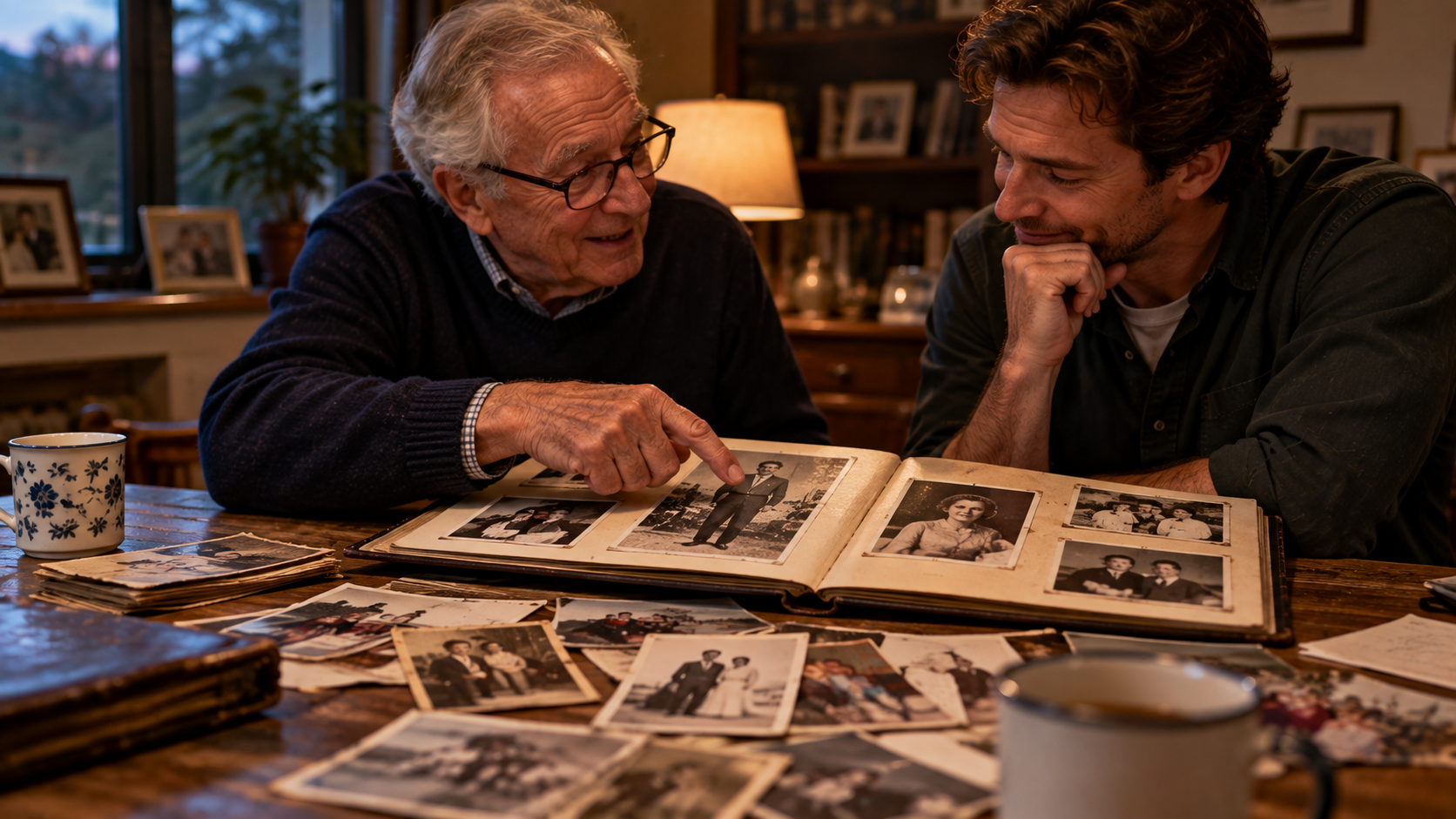
Find a photograph of a parent at twenty. Someone is wearing an alarming jacket. Someone has an arm round a person you've never met. There may be a car, a room or a stretch of beach which clearly mattered enough for somebody to take a picture.
You probably know how this person's story connects to yours. You may know surprisingly little about what happened before the connection.
The interesting starting point is not “Tell me your life story.” That is an enormous request, and it can make an ordinary chat feel like someone has arrived with a clipboard. Try asking about one thing you can see.
Pick something small
“Who were you with?” is a good opening. So is “What was that job like?” or “Where did you go on a Friday night?”
A song, an old address or a story about a first wage can work just as well as a photograph. Specific things give the conversation somewhere to begin. The person doesn't have to decide, on the spot, which of seventy years deserves an opening chapter.
Ask when there is room to linger. Making tea, going for a gentle walk or sitting after lunch may suit you better than announcing a special family-history session. Let them know you're interested without making them responsible for delivering something moving.
You can do this with a grandparent, aunt, uncle, older friend or someone who helped bring you up. If a relationship is unsafe or estranged, you don't owe it a reunion for the sake of an article. If the person has died, a willing relative may have stories or photographs to share, but there is no obligation to turn grief into a project.
Follow the bit that surprises you
Perhaps your dad mentions a job you didn't know he had. Ask what he actually did all day. Perhaps your mum names a friend you've never heard of. Ask what they liked doing together.
The follow-up is often more useful than another prepared question. “How did that happen?” gives someone space to continue. “What did you think you were going to do next?” lets them describe a future which hadn't yet become the past you know.
Try not to rush in with the established family version. You may have heard the funny ending a dozen times and still never asked what came before it. Equally, don't force a hidden drama out of an ordinary memory. A good night out can remain a good night out.
If they dodge a subject, leave it. Curiosity doesn't buy access to everything. And if they remember something differently from another relative, you can notice that without turning the conversation into a cross-examination.
Keep it only if they want you to
A recording can preserve a voice, but ask before making one. Explain where it will be kept and who, if anyone, will hear it. Agree again before posting an extract or sending it to a wider family group.
Notes afterwards may feel less intrusive. Put names on the back of a copy of a photograph, or write down the street, workplace and approximate year. Label uncertain dates as uncertain. Future you will appreciate that someone asked who the man next to the motorbike was.
Or keep nothing. Listening is a complete activity. You don't have to produce an archive to make the afternoon count.
You might finish with a story about a terrible boss, a dance hall or the friend who could always borrow a car. A small piece of a person you knew first by their job in your life.